A comparative reflection on independence and self-organization practices in Kosovo and the region
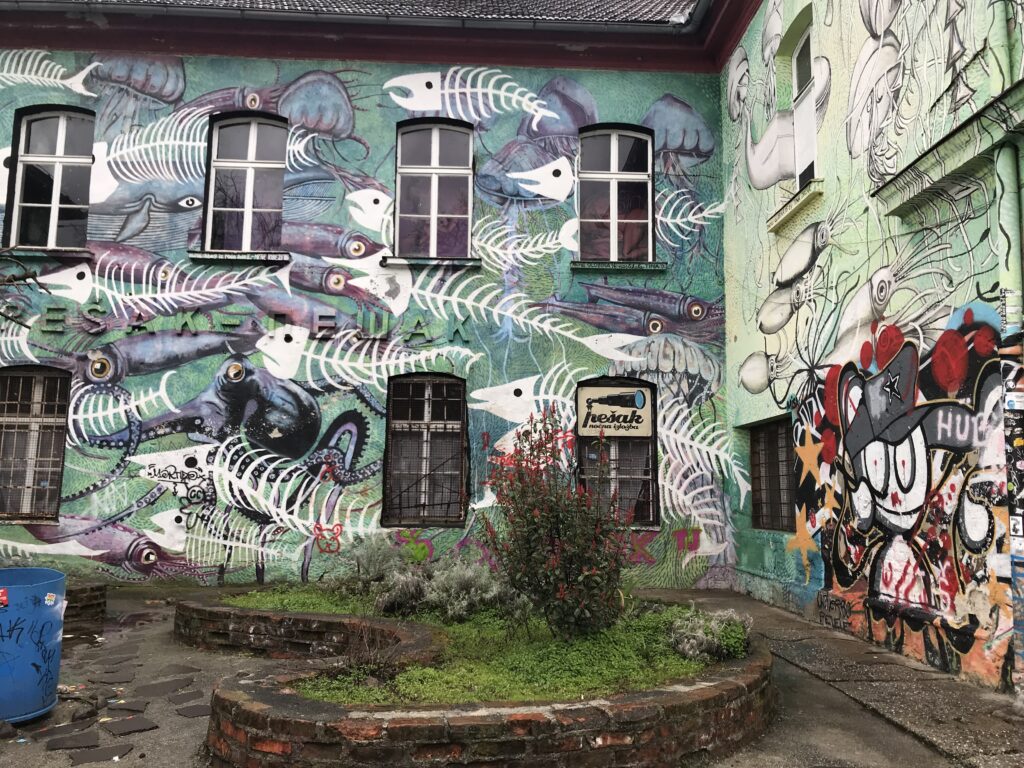
I spent half of this year in residencies in Austria, Slovenia, Hungary, and Serbia. Coming from a smaller and more contained art scene like the one in Kosovo, the plurality and diversity of artistic and cultural expression I encountered during this period felt new and refreshing. My journey through these scenes and the spaces that make up the “independent scene” stemmed from several of my own interests: mapping the trends and cultural specificities of the region’s independent scenes; conducting a comparative analysis of the models of independent spaces across the region; and documenting how “independence,” “self-organization,” and “collectively managed spaces” are defined and put into practice. I was particularly drawn to spaces that challenged the “white box” exhibition format, played with language, functioned as collectives, and communicated their values directly, without overreliance on theoretical jargon. I was interested especially in questions of resistance and positioning: do these independent spaces propose new value systems for art? Or, despite their intentions, do they echo institutional norms?
What does independence mean, and what could the “independent scene” be?
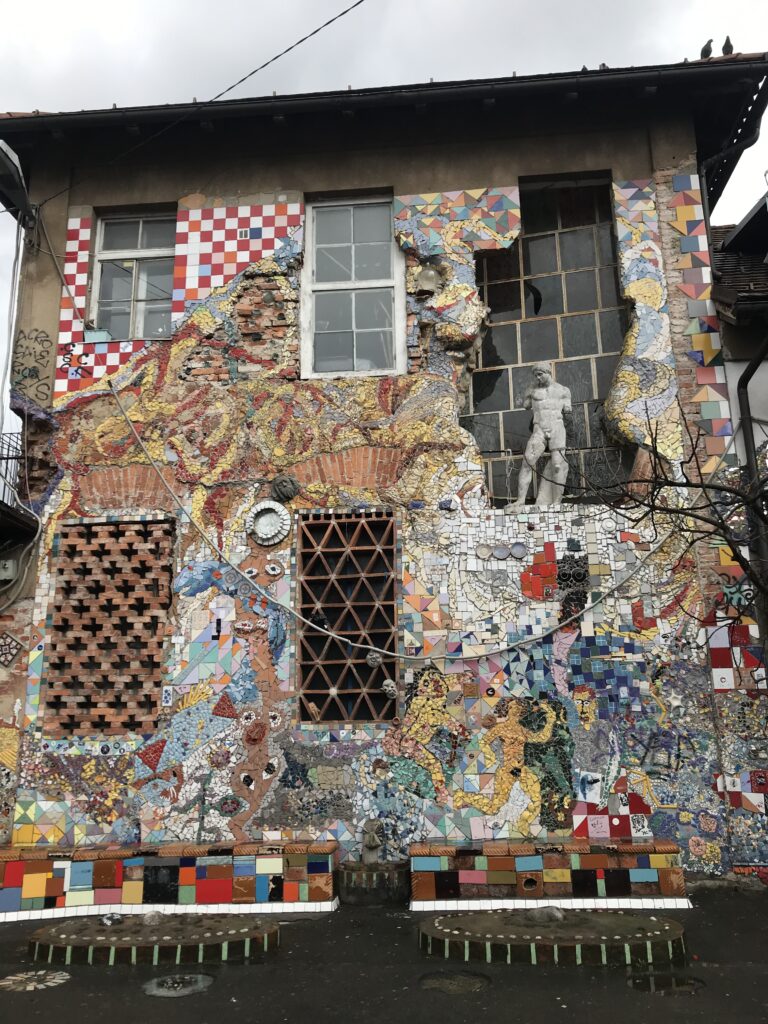
This text views the “independent scene” in light of the spaces and practices of self-organization and . or bottom-up initiatives, questioning the norms of cultural and knowledge production, the representation of peripheral perspectives, and horizontally structured and self-organized work.
.
Throughout this time of shifting both internally and geographically, I noticed clear differences in how “independence” of the “independent scene” is understood.
In our context, and in bordering countries to Kosovo, independence often means survival despite institutional support, and sometimes even a deliberate stance against collaboration with local institutions. The Kosovar scene shows dependency on foreign funding, while having relatively few truly collective or self-organized initiatives. .
Moving towards Central Europe, dependence on state funding and institutional support for experimental practices increased, and “independence” often meant negotiating freedom within those systems. The Viennese independent scene largely survived through public funds from the central government, municipality, or neighborhood funds. For Vienna’s independent scene, reliance on public funds does not necessarily contradict autonomy, but instead shifts the focus toward issues such as curatorial freedom, freedom of programming, or resistance to the commodification of art .
This realization was new to me, as I was accustomed to the social conditioning in Kosovo that one must constantly “prove oneself” to create space for new cultural initiatives, experimental art practices, or peripheral forms of social organization — advocating tirelessly, often at the expense of one’s emotional and material security. Their discourse, by contrast, is less centered on resistance and more on negotiation, unlike in Kosovo, where support for alternative practices, marginal models of organization, and the plurality of cultural expression remains conditional on the availability of mostly foreign funds and their consequent interests and requests.
What becomes clear is that independence is not only financial but also discursive: artists and community organizers retain the freedom to (re)invent the language around their practice and shape it according to their intention. This layering of autonomy — both material and linguistic — explains why definitions of “independence” among space managers were so diverse: for some, it meant determining their own timelines; for others, it was the freedom to operate within state-supported contexts; and for others, it meant resisting simplification and embracing ambiguity and multiplicity.
Cases of Political and Grassroots Organization of Artists and Collectives in the Region . .
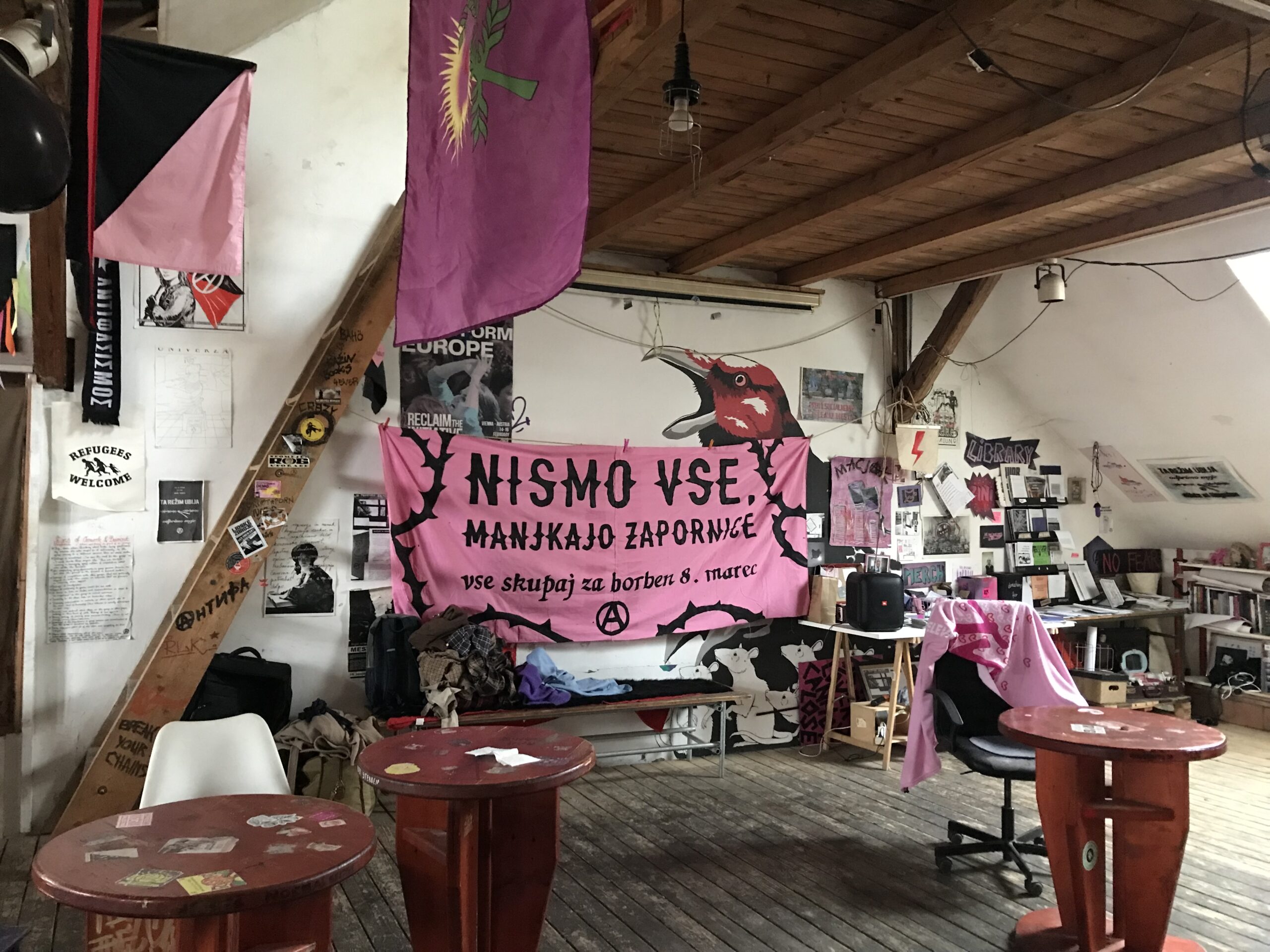
In Slovenia, I encountered an improvised and “self-organized” scene rooted in the socio-cultural heritage of the 1990s, during which time activists, artists, and young people “occupied” various public spaces for their own needs: using them as artist studios, organizing collective public programs, and engaging in political organizing. This constitutes the culture of squatting, the closest and only example of which in Kosovo is Termokiss. par excellence Although many of these collectives were forcibly evicted by the state, such as Rog, which later became a quintessential example of gentrification, there were also spaces like Metelkova, which the state allowed to remain as such after it became a tourist hotspot. However, this transformation continues to alienate and financially burden the very users. ..
In Budapest, one of the most interesting spaces is Gólya, a cooperative initiative through which the collective that used the space managed to purchase it via crowdfunding — pooling community resources and combining small forms of financing: members’ savings, direct loans from supporters, and donations. The building was then renovated through volunteer labor, and today functions as a cooperative — a form of organization that enables members to own and run the space collectively.
KC Magacin is a former publicly owned warehouse in Belgrade that was transformed into a self-organized cultural center by local artists, collectives, and NGOs. Since 2007, the space has been activated and managed by the community itself: users organize the artistic program, conduct repairs and maintenance, negotiate legal conditions and usage agreements with the municipality, and establish collective management practices, so that the space functions as a community-managed resource, not a top-down hierarchical institution. This has created a successful model of long-term self-governance and constructive cooperation with public authorities.
In this regard, Vienna’s independent scene offered an extraordinary diversity of artistic practices and cultural or exhibition spaces (some located in minivans or shop windows). Although larger, it did not necessarily demonstrate a high degree of political organization or collective awareness, instead operating within a kind of complacency in which the artistic scene seemed content with state funding. , .
Issues of Representation and Collective Organization in Kosovo’s Independent Scene
In Kosovo, meaning-making is not addressed to you, nor does it reflect your autonomy back at you. A culture has been developed in which artistic and cultural events are expected to be free of charge, made possible from foreign funding. These same funds have created both a dependency within the local civil society and a reconfiguration of their language.
Kosovars do not necessarily exhibit a strong capacity or awareness for self-organization or collective management of spaces, even though the need is obvious. In most regional collaborations, Kosovo’s independent scene tends to be represented through Lumbardhi, Termokiss, Kino Armata, or Kinema Jusuf Gërvalla through Anibar. There are spaces across Kosovo that were created for community and cultural purposes, initiated by individuals or collectives for their own needs, which often have a semi-business model to ensure some income and sustainability, though these efforts remain largely invisible to the public. Such spaces include Hani i 2 Robertëve, artist studios in the “Egnatia” neighborhood in Ulpiana, Social Space for Deconstruction in Mitrovica, Kolektiv in Prizren, and Looney House in Gjakova.
Kosovar society still does not view artists as valuable contributors. However, as funding and open calls have begun to increasingly emphasize translating issues of social justice into artistic mediums, the language of civil society is likely to gravitate toward them — if not through sustainable support to the artistic community, then at least through a more serious consideration of it.
A truly democratic state and society should allow and support unconventional, marginal, timid, and/or dissident voices, rather than remaining confined to a kind of affirmative, positivist-promotional public discourse — if it seeks to create and maintain healthy social relations free from radicalization.
This text is a follow-up and extension of the article “An Exercise in Discernment,” published in Arts of the Working Class in September 2025, and is part of a series of research and comparative texts on Kosovo’s independent and alternative scene in relation to that of the region.
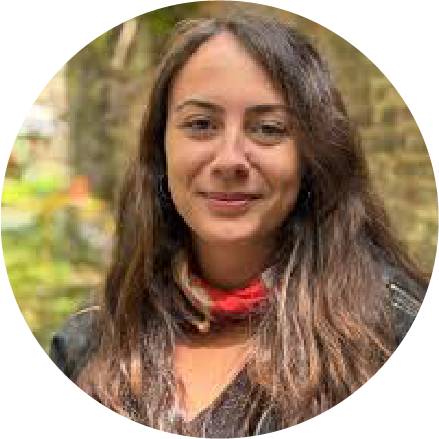
Diona Kusari
Multidisciplinary artist, writer, researcher, and cultural mediator based in Kosovo. Her work focuses on materializing the invisible, whether it be belief or ideology, as well as challenging the assumed divide between the private and the public. She works within horizontally organized collectives, such as Potpuri, which focuses on self-publishing practices and the self-production of knowledge. She writes experimental poetry, blogs, reviews, and articles that center on cultural reflection and critique, addressing the virtual and the symbolic, and theorizing around topics of so-called public interest.

The blog was published with the financial support of the European Union as part of the project “The development of art criticism”. Its contents are the sole responsibility of Hani i 2 Robertëve and do not necessarily reflect the views of the European Union.