Drita Kabashi
“Poetry wishes. It may wish to stop or eliminate time by its eternal promises or by replacing chronology with epiphany” - David Baker
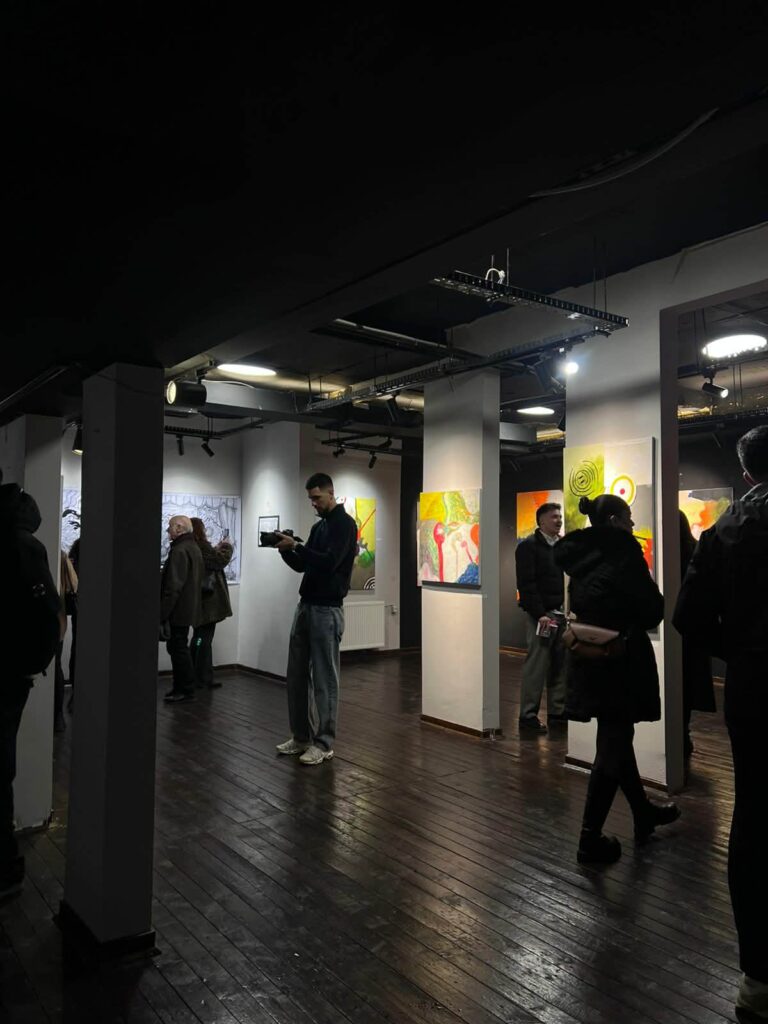
I’ll set the scene: the gallery or museum, its monochrome, sterile walls, heels echoing on the illustrious floors, hushed tones, thematic lighting. Next to the pieces, didactic placards with neat biographies that reduce complex lives and works into chronology and medium. Based on a study conducted by Lisa F. Smith and Jeffrey K. Smith first at the Metropolitan Museum of Art and later at the Art Institute of Chicago, visitors spent a median of 27-30 seconds looking at a given artwork (and/ or reading the corresponding text), no matter the piece from Leutze to Cézanne .
Ultimately, there is no “right” way, nor prescribed duration, in which to view or experience art. The act of encountering art is not fixed, but always contingent and shaped by a myriad of forces. Especially in Kosovë, where the institutional landscape has long been marked by fragmentation, the notion of conclusiveness becomes especially fraught. Can art, within such a fractured context, ever be rendered as definitive or complete? Or does it remain necessarily open-ended, reflecting and embodying the unfinished processes of the society that sustains it? Is there a way to center fracture itself?
I wonder if I could posit an alternative ambition. I ask, could curatorial text be art in its own right? I argue for the use of poetry as a curatorial tool of interpretation - as speculative, unstable, affective, unfinished - to echo the art itself, as well as the artists from whom it was generated.
Unlike conventional curatorial texts, poetry does not claim finality. It centers the author and their complex personhood in conversation with the artwork and viewer in a way that dissolves the perceived objectivity that often plagues institutional writing, while also dismantling the inaccessibility of academic language. It grants the viewer permission to feel, and to relinquish the obligation to “understand”. It can embody the emotional, speculative weight of a work without purporting to complete or conclusively present it.
Particularly when the historical or aesthetic information is incomplete, poetry resists the impulse to “fill in” the blanks - it can dwell in uncertainty without being reductive, by its very nature parceling together meaning through the futile device of language. It allows the viewers to imagine with the writer, rather than receive the interpretation from the writer. The writing, like the art, becomes ungovernable.
I am drawing inspiration primarily from work of Saidiya Hartman, a professor of comparative literature at Columbia University. Hartman is a scholar of African American literature and cultural history, coining the method of “critical fabulation”. This method blends historical research with speculative narrative to address gaps and silences in the archive, particularly where imbalances in power have erased or denied subjectivity. Hartman imagines and fabulates the rich inner lives of the historical players she examines.
Many purists of academic research may deem methods such critical fabulation simply “fiction with footnotes”, but I would argue that the statement in and of itself is problematic, implying history as static, existing in pure and absolute form, lying in wait to be discovered, neatly packaged into empirical data. Hartman’s method is a powerfully subversive tool in the field of historiography, as it lays bare the processual and constructed nature of historical writing - yet the method can easily be transcribed into curatorial practice as well. In a place like Kosova, where history is marked by rupture, displacement, and uneven institutional memory, critical fabulation becomes not just appropriate, but necessary, one in which the personal and the collective can (and should) be negotiated in simultaneity.
To demonstrate this practice, I will use as a point of departure the work of a modernist that I have come to hold in high regard. Since my first art history course in undergrad, I was spellbound by the existential, elongated forms of Giacometti, and the devotional, almost compulsive, seriality of Brancusi’s heads. Sculpture occupies space with the viewer - its presence physical, tactile, even confrontational. That immediacy is central to its effect, and one that I have always been drawn to as a theatrical artist. Perhaps, given these influences, it is unsurprising that I have always found Çavdarbasha’s work to be magnetic.
In a hospital in Moscow Agim Çavdarbasha turned fifty-four. In the sketchbook he kept with him he drew the numbers “5” and “4” with a candle atop, industrial blue and green tones - most likely drawn with pens (perhaps requested from hospital reception?). Amidst the swirling, humanoid figures characteristic of his style he drew some connected to MRI machines, he even stuck the gauze used to keep his IV in place directly on the page. The sketch collection, one of the few that survived the fires set to his atelier in the troubles of 2004, reads like a diary. It reminded me of Frida Kahlo’s self-portraits made during recovery from the catastrophic bus accident she survived at the age of eighteen- the psychological, physical pain and isolation foundational to her artistic practice.
It humanized Çavdarbasha in a way that touched me deeply, and provided a nuanced view into a life that, although well documented in the National Gallery archives and press clippings, could easily be reduced to a series of exhibitions, awards and recognitions, chronology, biographical information (born in, passed in, lived in, studied in). Flipping through the sketchbook, I saw a man whose art was not merely a product, but a vehicle through which to contend with life itself, its unpredictability, its challenges and even, the humor therein. Not merely through his finished and polished works, but through the instinctual, at times messy, need to make sense of reality that I so clearly saw him connected to a larger network of global artists that make art because they need to, because it is the only thing that makes sense. We lose this complex humanity in institutional writing.
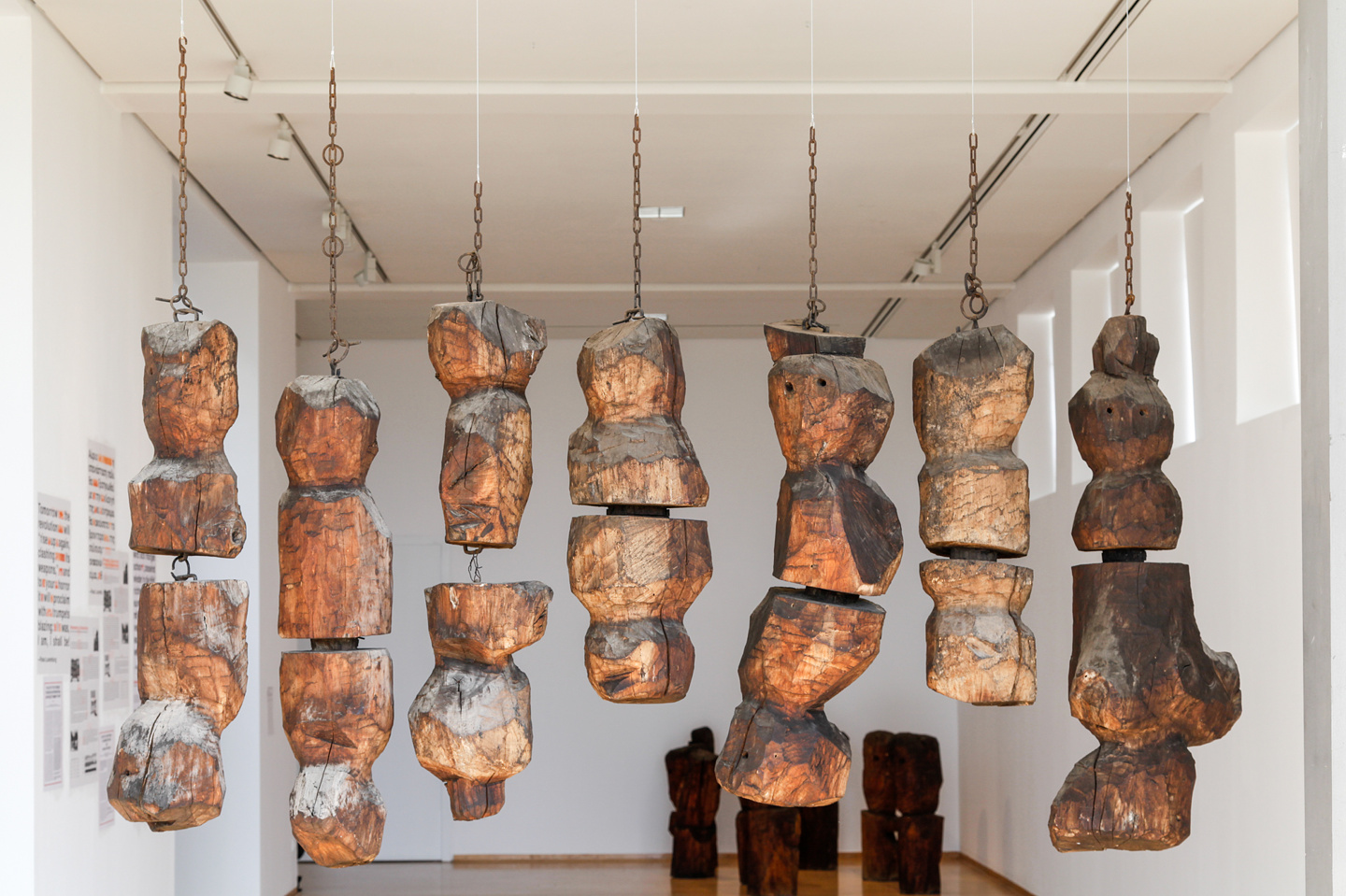
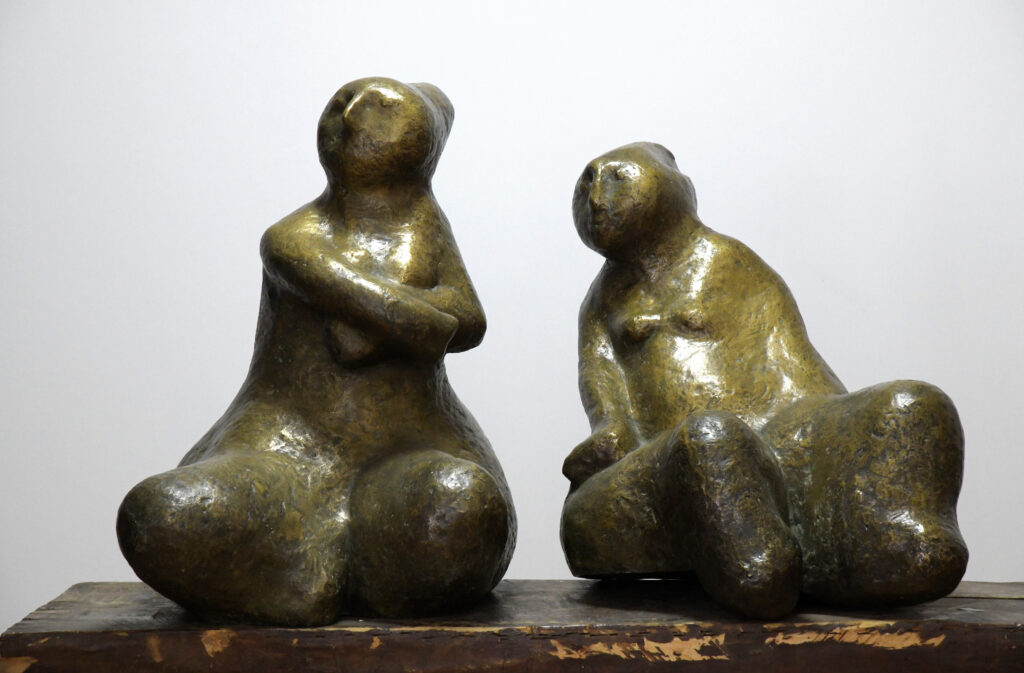
Agim Çavdarbasha’ sculptures, particularly those depicting fragments of the body or faces in reduced form, resist easy narrative. Their smooth, sinuous presence seems to exist outside of time yet are loaded with Kosova’s recent and distant histories. His life and work the perfect case studies for my proposed praxis.
In a 1981 catalogue for Çavdarbasha’s solo show, Eqrem Basha writes an introductory text. The gist of the writing is commendatory and hyperopic, addressing the artist’s oeuvre and overarching aims and less concerned with the specific pieces in the show. This is followed by a biographical timeline: birthplace, training, exhibitions, awards. Then the list of exhibited works. Name, medium, no dates:
8. Sfera I, bronze
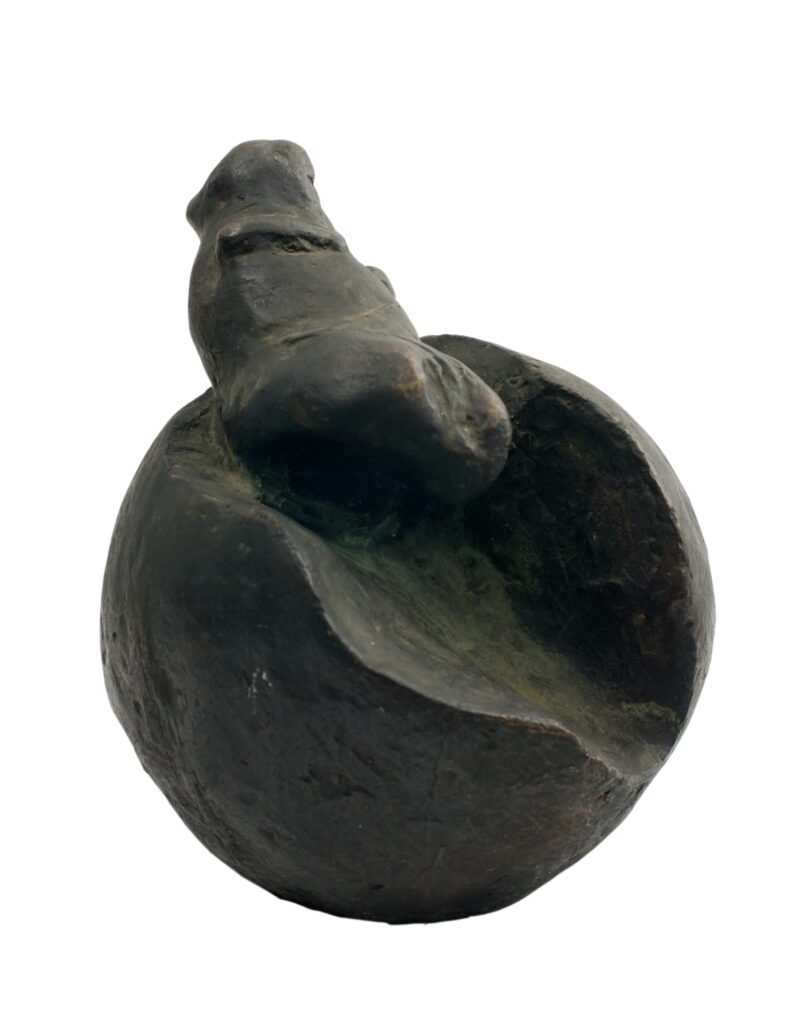
But perhaps, in its place, we could consider:
With a violence
That belongs only to the realm of creation
A tangled mess of limbs emerges from the void
We muscle our way through the muds of time
Perhaps never truly falling
But always on its precipice
Additionally, one could consider the terracotta lamps of Ancient Dardania at the National Museum of Kosova, for whom little (at times contradictory) information is known. This is due partially to an earthquake that destroyed Ulpiana in 518 AD (Shukriu 2008, 21), taking with it knowledge of lifeways and valuable archeological evidence that would otherwise be derived through the objects in situ. But let us also not forget that they were unearthed during an age of archeology deeply embedded in former Yugoslavian administrations that carried with them their own political and ideological frameworks, implications, agendas.
A corresponding museum label reads:
Lucernae, dated III AD, terracotta, 9 cm (w) x 3.8 cm (h)
How about instead:
Where there is light
There needs must also be shadow.
Together, the dance of illuminated surfaces
And rapture of darkness
Create a shifting, fragmentary visage
An apt metaphor (I feel)
For the nature of truth
The National Gallery of Kosova, the Ethnological Museum in Prishtina, the National Museum of Kosova, all currently in flux through renovations, relocations, shifting archives, are themselves in a speculative moment. Why not meet that flux with curatorial tools that embrace speculation? This is not about replacing scholarship with feeling, per se, but about expanding what counts as interpretation. What happens when curators give themselves permission to write experimentally, or when wall text speaks prose?
[1] The studies spanned both the eras before the smart phone and its subsequent ubiquity.
Bibliografi
Baker, David. 2007. “Lyric Poetry and the Problem of Time.” Literary Imagination Volume 9, Issue 1: 29-36.
Çavdarbasha, Agim. Agim Çavdarbasha: Skulpturë / Grafikë. Edited by Engjëll Berisha. Text by Eqrem Basha. Photographs by Afrim Spahiu. Translated by Vehap Shita (Serbo-Croatian) and Genc Nimani (English). Prishtinë: Rilindja, 1981.
Çavdarbasha, Guri. Informal interview by Drita Kabashi. Atelier visit, Agim Çavdarbasha’s studio, June 16, 2025.
Hartman, Saidiya. Wayward Lives, Beautiful Experiments: Intimate Histories of Social Upheaval. New York: W.W. Norton, 2019
Kaplan, Isaac. “How Long Do People Really Spend Looking at Art in Museums?” Artsy (blog), 7 nëntor 2017. Aksesuar më 12 qershor 2025. https://www.artsy.net/article/artsy-editorial-long-people-spend-art-museums
Shukriu, Edi. 2008. “Prehistory and Antique History of Kosova.” Thesis Kosova, Numër 1: 5-28. https://www.academia.edu/67115353/Prehistory_and_Antique_History_of_Kosova

Drita Kabashi
Artist and art historian

The blog was published with the financial support of the European Union as part of the project “The development of art criticism”. Its contents are the sole responsibility of Hani i 2 Robertëve and do not necessarily reflect the views of the European Union.