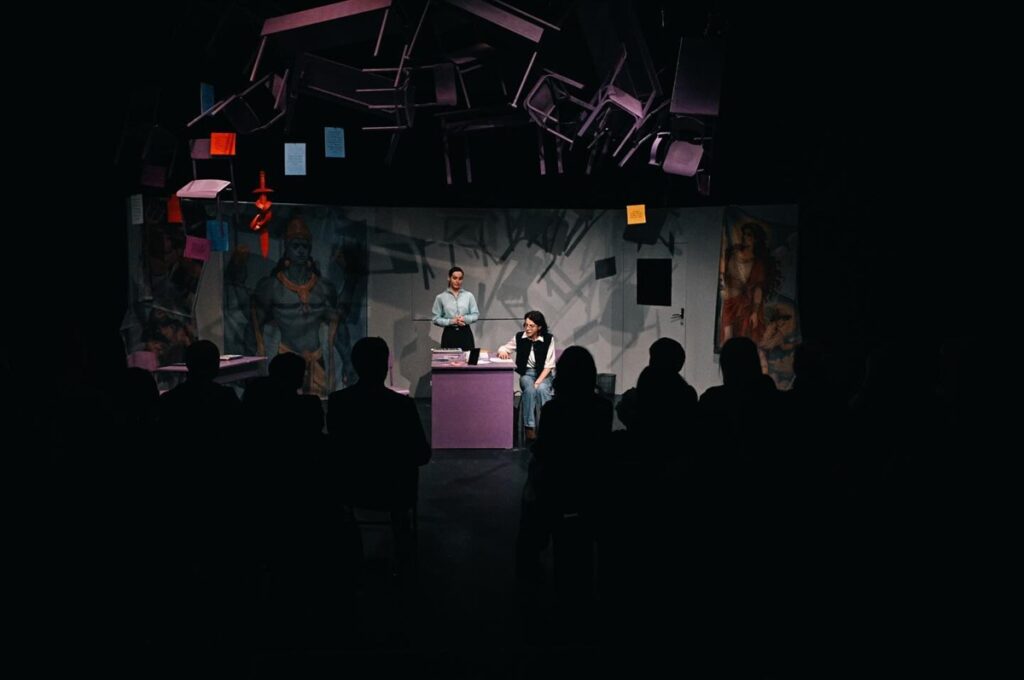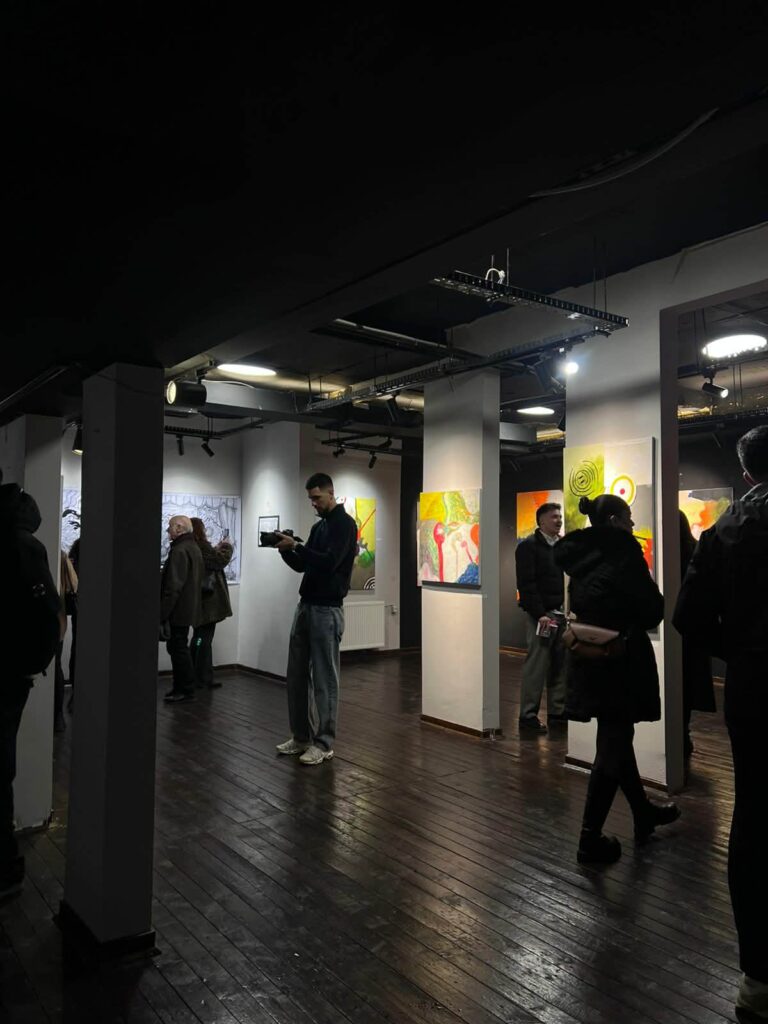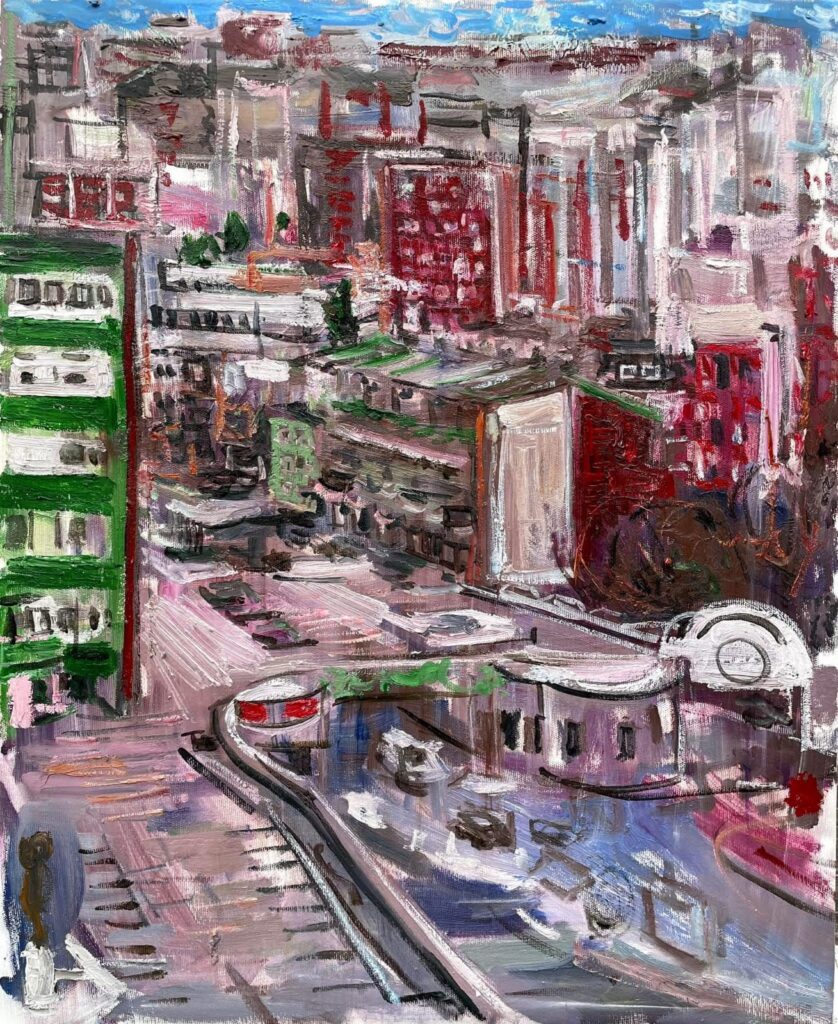
The past, throughout human history, has been recorded and continues to be recorded in various ways. Undoubtedly, memory, initially as a biological function, also enables these recordings. History is recognized as the discipline of recording and interpreting memory of the past. Yet the past, as both memory and history in all its nuances, has been materialized and expressed in artistic creation just as diversely: in writing, sculpture, painting, and other performative forms.
Debates about types of memory and ways of remembering or recollecting remain relevant in memory studies. “Can there be such a thing as collective memory at all?” Bartlett asked in 1932, while Schudson, in 1992, asked the opposite: “Can memory be anything other than collective?” In response, Wertsch and Roediger offered a meeting point between these two positions, emphasizing that “it must be agreed that socially situated individuals are agents of memory.”
These agents of memory and its materialization, as a form of remembrance, are the artists themselves, who, through individual memory and personal aesthetic expression, speak of a past that is part of a collective history, of a culture. They are the voice, the rhapsodists of specific events and experiences in a particular time and place.
Art and artists are beautiful connecting bridges between the past, present, and future. Their works are aesthetic carriers of feelings, experiences, meanings, and interpretations across generations. They open opportunities for deeply individual experiences and interpretations, whether by the creator or the audience, giving space both to the individual and to the collective.
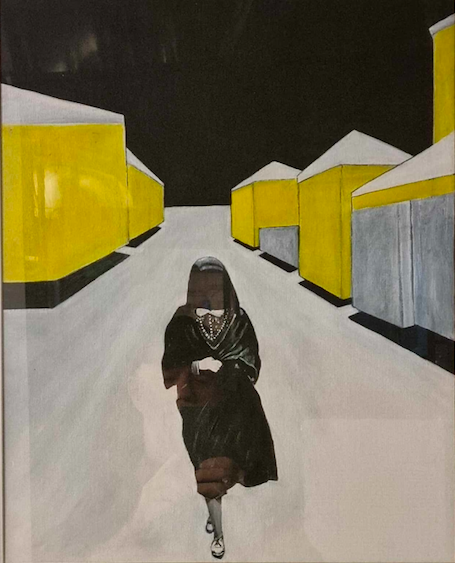
In the present work, such a connecting narrative can be seen. The veiled woman is part of my individual memory from childhood. She is the woman covered with a veil, in black, which could easily also symbolize memory gradually shrouded by the veil of forgetfulness. But in this case, she recalls an ordinary scene from the past; a story. In our streets, women walked dressed in the same way, and this attire was part of the cultural reality of our city, part of the social status of women.
The mothers and aunts could often be confused when we saw them during games in the neighborhood streets. Sometimes, from the way they walked or held their hands, one could tell whether it was Mother Hilmije or Aunt Sadije, but even then, there was guesswork. And before we ran to embrace them, we had to assess (and reassess) the strength of the hug. The aunt had to be hugged more tightly because we saw her less often! Not only us children, but also the men, father or the aunt’s husband, who sat together in the street, near a stone by a yard gate, smoking and talking about the day’s troubles, would sometimes make guesses of their own. Occasionally, the guess would turn into a game or a playful contest between them: “No, this is Hilmija,” one would say; “No, no, it’s Sadija,” the other would reply.
Today, more and more often, we can see such images of women. And this present pushes us to reflect: should we look at the future more clearly, or insist on clarifying the images?
This painting, as a result of individual memory, is a remembrance of a collective past, which today can be clearly understood as a reminder of the choices that current and future generations may or should make. It can be seen as a message that memory must be unfolded from the fog of forgetfulness, and that women today need to clarify not only images but also their vision. This painting may symbolize resistance to a past that is both nostalgic and unwanted, not only for women but for society as a whole. Abstract concepts such as human rights are often unclear, but memories and art serve as conveyors of meaning that can illuminate certain dimensions and versions of these rights.
Choices and possibilities are always numerous, and memories, especially visual ones, make it easier to see a desired future more clearly.
Orhan Kurtolli
The author is a dentist by profession and has cultivated painting for years as a form of aesthetic expression and personal reflection; he also articulates his creative experience in critical texts, through which he responds to the social and cultural realities that surround him.

The blog was published with the financial support of the European Union as part of the project “The development of art criticism”. Its contents are the sole responsibility of Hani i 2 Robertëve and do not necessarily reflect the views of the European Union.