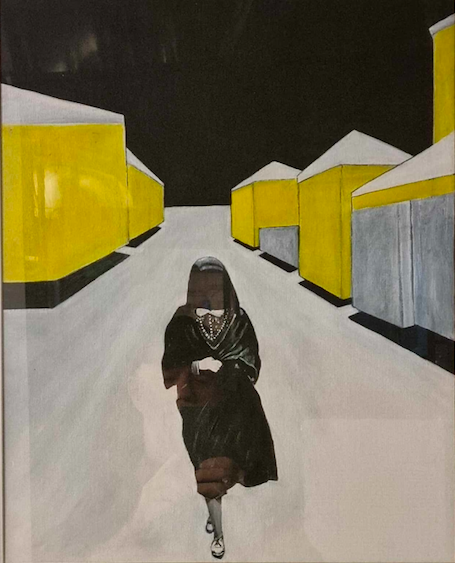
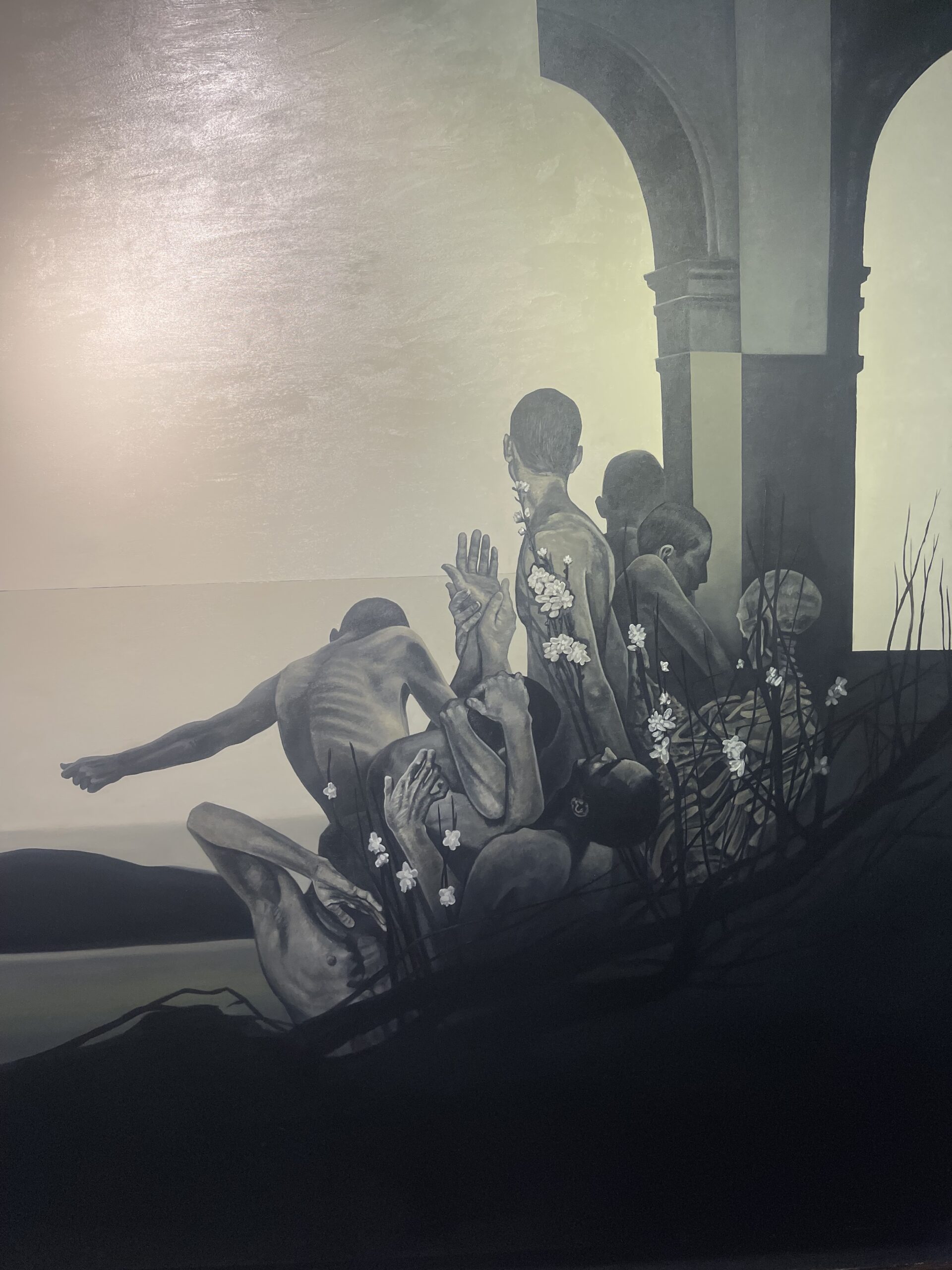
Arbër Sahiti belongs to the generation of Kosovar post-conceptual artists who are returning to classical mediums of artistic expression. In this case, the focus is on painting. However, the “rehabilitation” of painting does not occur without a prior pact with concept, which restores it as a preferred medium of expression. Sahiti’s conceptualization, whether conscious or not, is linked to a Platonist worldview of reality, which is already revealed in the title of the work, What I Don’t See.
This title, with or without a question mark, both readings are possible, like two interchangeable states of aggregation, refers to the paradox of seeing and perceiving reality. In the theory and practice of visual arts, this paradox revives the doubt that what we see with our eyes, and what is prepared to be seen, is not the truth of reality, but rather the penumbra of a supra-reality of ideas and concepts. Plato explained this relationship with his famous Allegory of the Cave: in this world, we live as if in a cave, where with our eyes we see only the shadows of ideas and truths. As cave dwellers, we perceive only the faint penumbra of ideas.
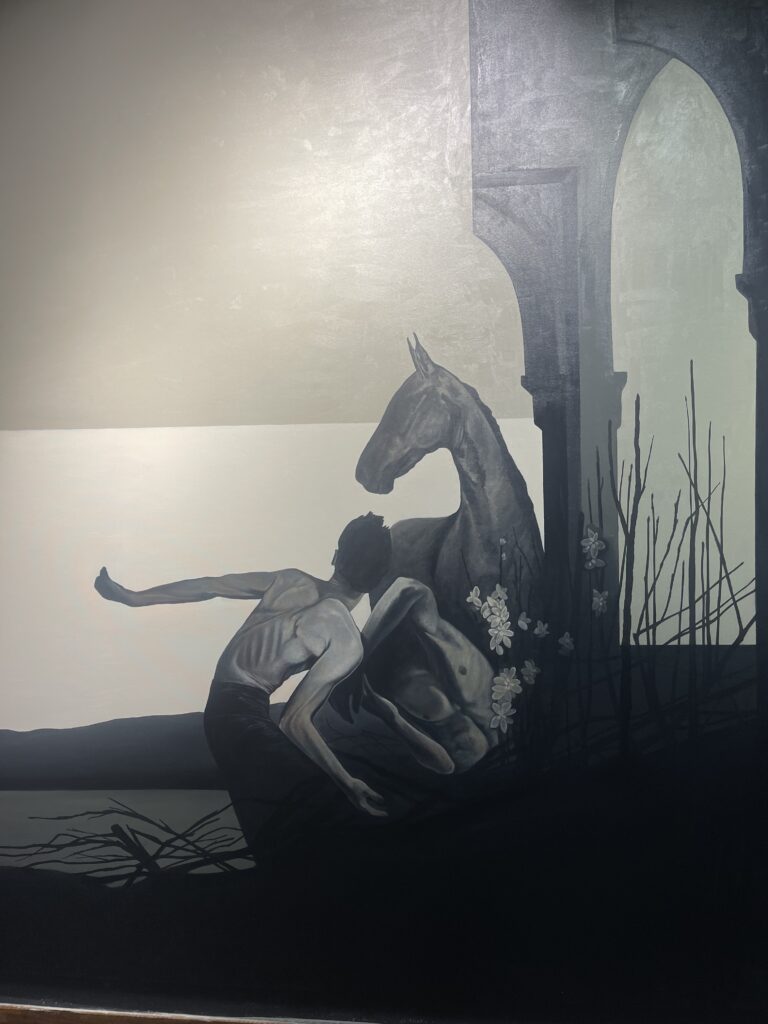
Arbër Sahiti’s painting is conceived as an experience of this penumbra. If seeing is an illusion, then our entire “realist” construction, what we perceive, is flawed, incomplete, deceptive. Even Sahiti’s cave dweller is presented as incomplete, almost caricatured. He has no eyes, no eye sockets. The bodies themselves appear imperfect, unrealized to the end, even uncolored, alone like shadows of sorrow. Moreover, in compositions with groups of figures, he does not show them face-on, but from behind, in poses of existential struggle, perhaps dramatic, yet without explanation, stripping them even of the horizon of hope.
In one of the compositions, several people with their backs turned stand near the ruins of an ancient temple and look at the sunset on the horizon. This recalls, for comparison, Muslim Mulliqi’s famous painting "Hamalli", where the lonely porter is shown with his back turned near a wall that limits his view and his freedom, yet still allows him to see the light of the sky and the hope beyond the wall.
In Sahiti’s work, the sun shines, but it remains distant and mystical; it leaves no room for hope, only for sorrow and senselessness.
Shkëlzen Maliqi
Filozof, Kritik Arti, Analist politik

The blog was published with the financial support of the European Union as part of the project “The development of art criticism”. Its contents are the sole responsibility of Hani i 2 Robertëve and do not necessarily reflect the views of the European Union.