Kintsugi, the Japanese art of repairing broken pottery with natural adhesive and gold powder, has long surpassed the boundaries of an aesthetic restoration technique, becoming a life philosophy and a cultural model for symbolically understanding breakage, acceptance, and rebirth. Its concept appears simultaneously as an artistic process, a cultural attitude, and a powerful metaphor for the way individuals and societies deal with their own fractures. At its core lies the idea that cracks are not the end of a form, but the beginning of a new form of beauty and integrity, making Kintsugi a clear paradigm of restoring value through care, patience, and acceptance.
In the contemporary discourse of art and cultural anthropology, Kintsugi stands as one of the most meaningful examples of how art can transcend the aesthetic dimension and transform into a way of life. Although technically it is a process of repairing broken ceramics with a mixture of natural adhesive (urushi) and gold powder, the symbolic meaning of this act goes far beyond the material dimensions of restoration. Kintsugi embodies the idea that breakage is an inseparable part of existence and that it should not be erased or hidden, but accepted and honored. Through this perspective, the crack becomes value, the damage becomes aesthetic, and loss becomes a new form of life, turning Kintsugi into a cultural guide that teaches us how to confront our personal and collective fractures.
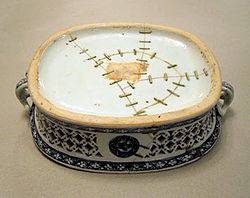
The technique of Kintsugi, despite its apparent simplicity, reflects a profound structure of thought. The process begins with accepting the breakage and gathering every fragment, no matter how small, embodying the principle that no piece is unnecessary. The mixture of natural lacquer with gold powder is not merely a technical material: it symbolizes the value and honor given to the treatment of the wound. The joining of the fragments is carried out with particular care, not with the aim of restoring the vessel to its previous form or concealing its distortions through patination, but with the acceptance of its reforming as part of its new identity. The cracks are filled with gold not to hide them, but to make them visible—to affirm them as stories inscribed into the very form of the object. In the end, the polishing of the surface gives the vessel a new radiance that arises precisely from the fragility that has been overcome.
Kintsugi thus becomes a powerful metaphor for life, and is studied today within the fields of art, cultural heritage, psychology, anthropology, and philosophy. In Japanese culture, it embodies the concept of wabi-sabi—the beauty of the imperfect and the transient. This way of thinking turns Kintsugi into a cultural model that encourages the acceptance of breakage as a natural part of human experience and identity. Within this “philosophy,” breakage reshapes us; the crack becomes a marker of past experience; rebirth becomes an act of will and awareness; while the gold becomes a metaphor for the attention, love, and care we offer to ourselves and to others.
In the discourse of identity, Kintsugi—an ancient art that has acquired new dimensions—offers a profound paradigm for understanding the individual as a being in continuous transformation. Cracks are no longer regarded as signs of damage, but as elements of character and personal history. Filling them with gold turns them into markers of intimate narrative, symbols of resilience, and integral parts of a new, deeper identity. This makes Kintsugi a valuable model of cultural therapy, for the individual, like the vessel, does not aim to return to an initial state or to conceal wounds, but to create a new form—stronger and more beautiful—through accepting transformation.
In contemporary contexts of trauma, conflict, and social transformation, Kintsugi can serve as a methodology for emotional education, art-based therapy, and cultural dialogue. It offers a clear model for accepting the past, healing wounds, reconstructing personal and collective identity without losing form, and cultivating a culture of care and awareness. As a cultural metaphor, Kintsugi reminds us that cultures may fracture, but they can also be reborn in more mature and resilient forms—provided the fragments are not discarded and the cracks are filled with “gold,” with care, attention, and love for the truth. Heritage remains as a form that does not vanish, while a new history is built by reconnecting the pieces that the tides of life have displaced, some of which have been damaged to their core. It is precisely there that the “golden lacquer” emerges—the luminous vein that traces the new identity, healed, shaped by experience, and strengthened through the acceptance of truth.
In the end, Kintsugi teaches us that beauty does not reside in the unchanging, but in the restoration that transcends the break. The art of filling cracks with gold invites us to see damage as an opportunity for a new beginning. Through Kintsugi, art becomes culture, culture becomes philosophy, and philosophy transforms into a life lesson that teaches us that breaks should not be hidden. They are our hidden treasure that cannot be hidden, the places where we learn to be reborn. In those cracks are preserved our deepest memories, the experiences that have shaped us, and the vulnerabilities that have taught us to endure. When the pieces are reassembled, the bonds are not merely materials holding the form, but our very experiences crystallized—the ways we have learned to move forward. They transform into veins of gold that define us, creating a new identity that is more conscious, stronger, and brighter than before the break. In this way, our personal story does not vanish, but grows, embracing the wound as the starting point of rebirth.
From every art, we learn something and about something, but from this art we learn a great deal, because it teaches us to see wounds as light and breaks as new beginnings.

Skënder Boshtrakaj
Visual artist

The blog was published with the financial support of the European Union as part of the project “The development of art criticism”. Its contents are the sole responsibility of Hani i 2 Robertëve and do not necessarily reflect the views of the European Union.