Post-Mortem
Time is a force that no one can conquer. It remains an unstoppable queen, bringing us novelty, not always acceptable, and not for each of us. We move through life recording moments that are often unconscious, yet inspiring. Even as we grow, childhood demands our responsibility and its return, enriched with values, before the judgment of others.
As artists, we focus memory where we have confidence and express it through its reenactment in our work. In this case, the author returns to the events that have surrounded us and continue to do so: interior spaces, toys, spatial elements, and figures that construct the continuity of generations, from grandparents and parents to ourselves.
The generation of Jeta is linked to a period of rapid, dizzying transition, both physical and technological. The works appear tangible to both the eye and the mind for many viewers. They evoke associations with childhood as well as the confusing events of the early post-war years. Based on the author’s artistic concepts and descriptions, which, for the time, are quite bold, along with the titles and the applicative and figurative techniques she used in her work, one can observe a daring approach to composition while still preserving a sense of the everyday.
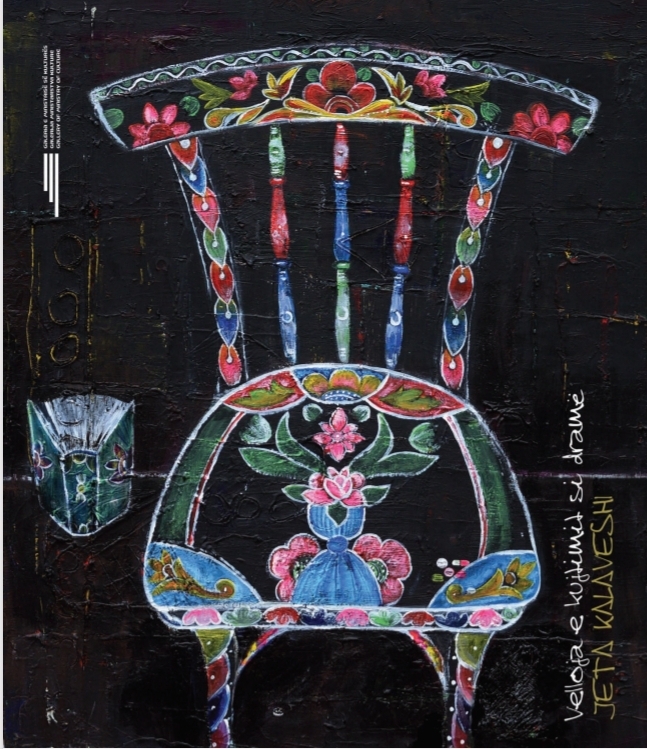
Post-Mortem of the Book and the Chair Awaiting the Reader
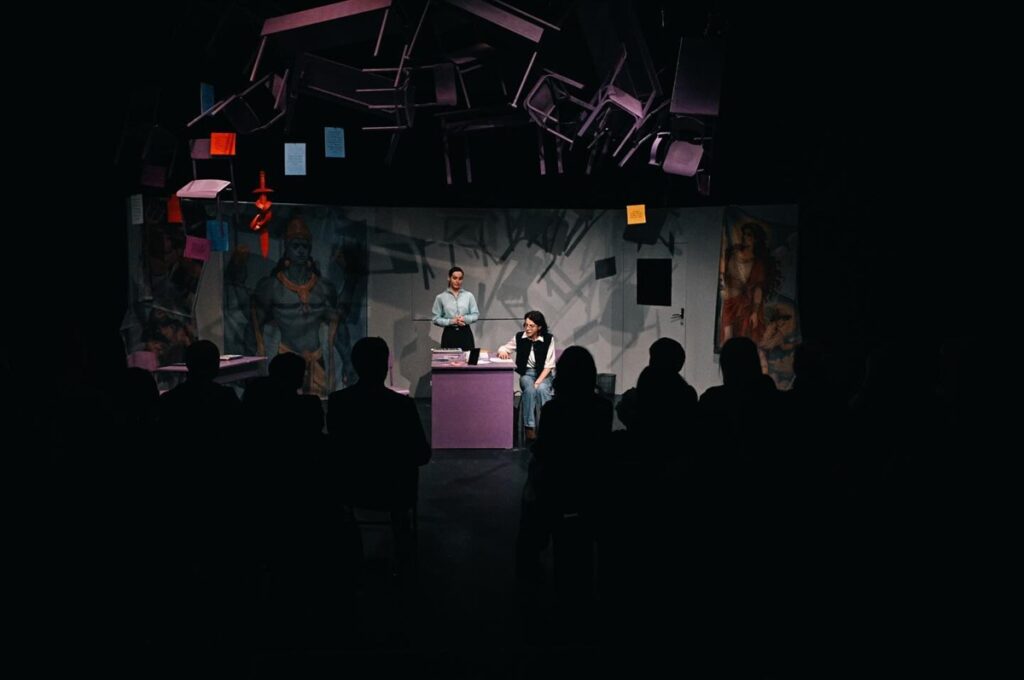
Through her universal works, Jeta Kalaveshi makes us aware that we must accept the fact that, for a vital segment of readers, reading time is unfortunately under threat, perhaps due to electronic achievements, which can be painful and perhaps even declared as post-mortem. Back when our generation had the desire and the only opportunity to read books, magazines, and newspapers, we also needed and longed to live and be physically close to one another, where emotions and sensitivity were experienced in roughly the same way.
The present era of electronic reading seems to have changed us, enclosing us in an ego that never fully reaches our emotions. It seems that, unfortunately, our feelings toward books are growing colder, and the path to the library appears increasingly distant, so much so that even the building itself seems like a monument with few visitors.
Through her concepts and imaginative creativity, the author expresses the desire to create a subtle connection between the book and the electronic medium, even though she understands that time is unpredictable and completely different in the way it receives comprehensive knowledge.
Something unique within the author’s works lies in the fact that she reveals the other side of love, which has now lost its naturalness and become a mechanical routine, while the emotional and spiritual aspects remain somewhere distant.
VELLOJA E KUJTIMIT SI DRAMË
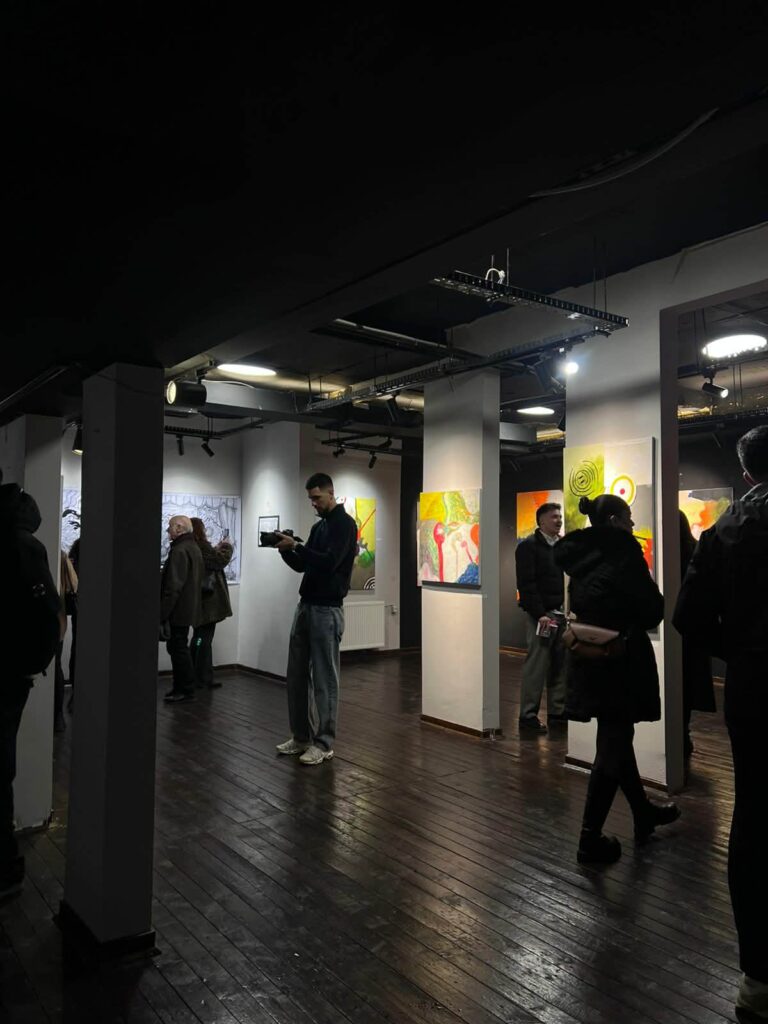
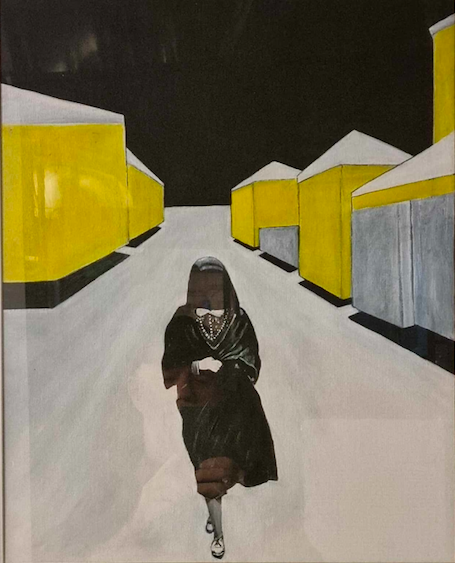
In the series of paintings titled “The Veil of Memory as Drama,” she releases an outburst of memories through the shadow and mist of the veil, using drama and dynamic forms. She tries to show that meaning and trust have been lost with the beginning of the new century, warning that we have entered an unknown path, perhaps toward a harsh and challenging future for us as subjects of the time we are living in.
Digitalization, or the archiving of cultural values, makes us more in tune with the times, albeit somewhat hesitantly. The results of the works presented suggest that, according to the author, much spiritual wealth, starting with family and public libraries, has seemingly become a problem for “contemporary” new families, who are taking the path of recycling.
How long can we resist memory and time, and in what way? Life itself shows us, and Jeta, through her creations, with original motifs that make us nostalgic, reminds us of artistic works, respect, and ways of living.
That we were once children can be seen in every element used in the paintings and within them through the artist’s own expressive language. In addition to the environment that has surrounded her, the author incorporates elements of the ethnos as indigenous symbols, while also painting the corner of the room with her grandfather’s books.
In the Post-Mortem cycle of works, one or more individuals sit on top of a bookshelf, revealing their disregard for their own wealth, unaware of the treasure upon which they are seated. The painting technique is lazure, accompanied by contours that define the space and its details.
I would describe this depiction of hers as a realistic expression with a conceptual tendency, a direction that few today are willing to approach, exploring, from time to time, motifs and expressions in order to find oneself, bringing to life one’s own intentions and experiences, whether momentary or rooted in childhood.
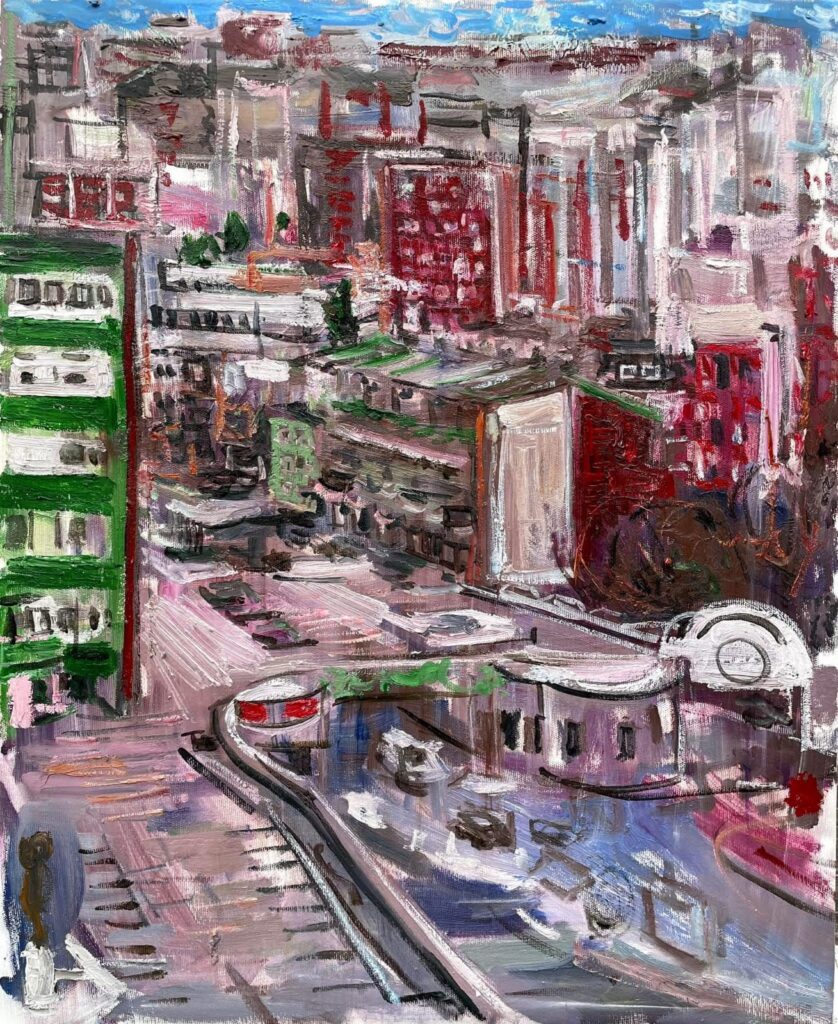
The composition and the richness of colors, whether lazure or paste-like, give the work a distinct dimension, gathering fragments of time and bringing them to life in the artwork with the aim of offering society a universal message.
Prof. Zake Prelvukaj, M.A.

The blog was published with the financial support of the European Union as part of the project “The development of art criticism”. Its contents are the sole responsibility of Hani i 2 Robertëve and do not necessarily reflect the views of the European Union.