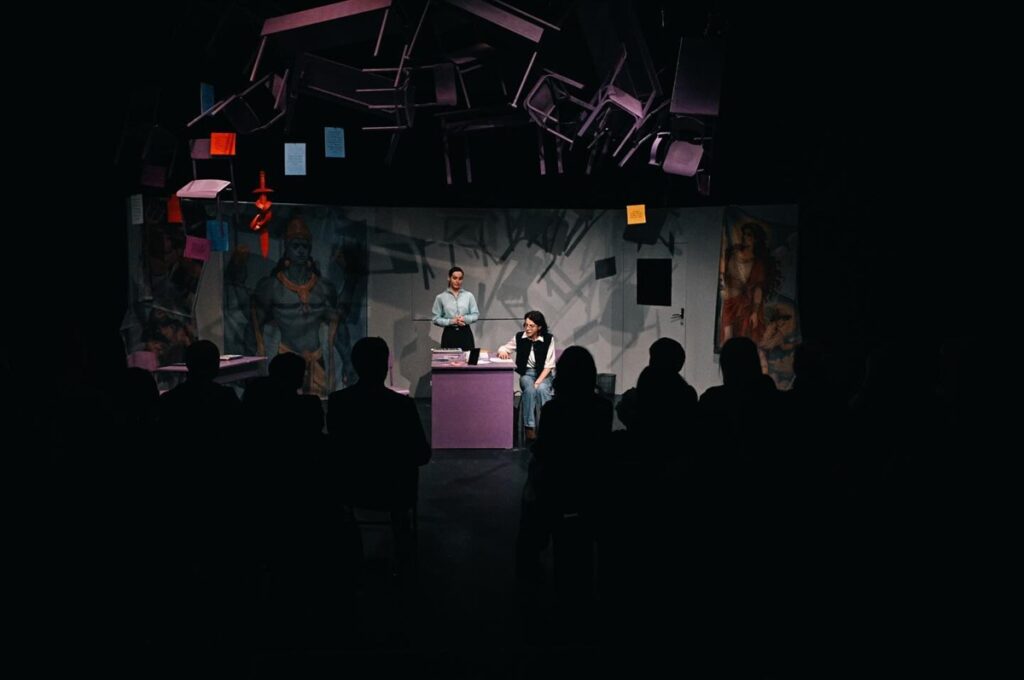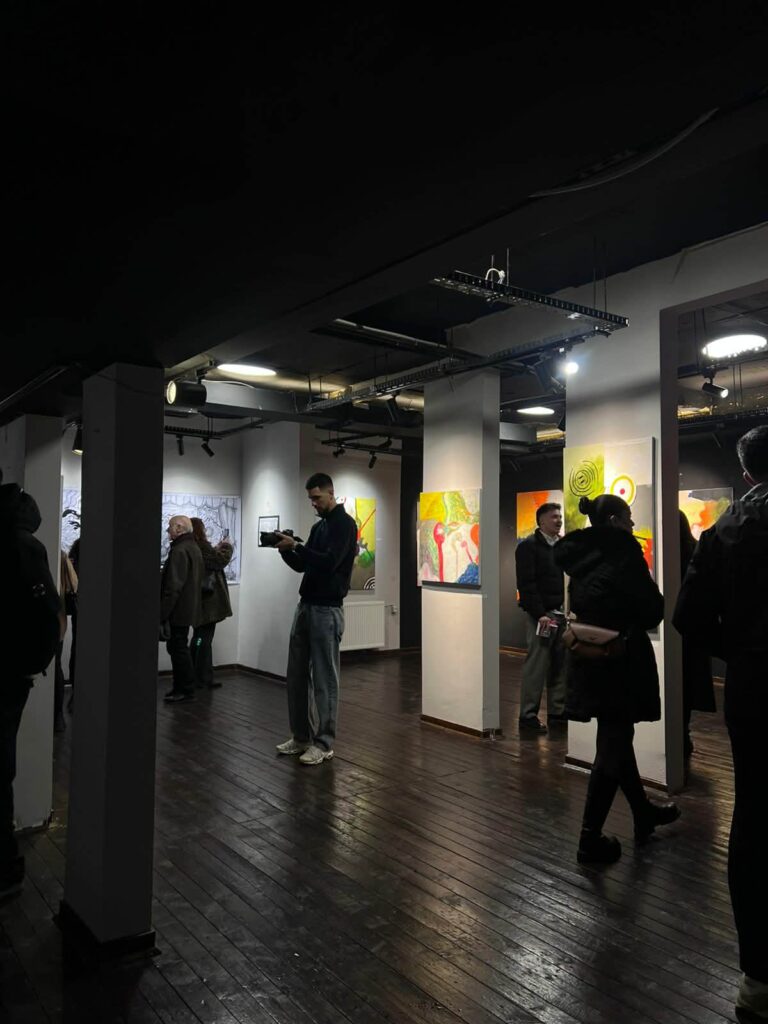
Zoran Filipović Exhibition "1991"
Organized by the Croatian Embassy in Prishtina
October 30, 2025 – Hani i 2 Robertëve
Memories fade, and forgetfulness is insatiable. Only a very small part of individual memory manages to be distilled into collective memory. The loss that occurs there is already immense. Yet, the memory of the individual—Veronika’s scarf—is the only thing from which history has been erased. And this often gets filtered through the colored lenses of ideology, politics, the industry of forgetting, of good intentions, and also of ill ones. Personal memory, however, is a substance that must be consumed like medicine. Bitter as it may be, and costly as its resistance might prove.
For nearly half a century, I’ve spent my summers on the island of Šipan. Speaking about the days of the war in Dubrovnik, my neighbor Tonči, who has withdrawn from public life, told me this summer: “If you really want to know something about that time, there is one man who has always spoken the truth and whom you can trust completely. Read Zoran Filipović’s Diary of Death.” And, a little shyly, he added: “He even mentions me there.” To make it easier for me, he went to Dubrovnik, borrowed the book, and brought it to me. Why do I mention this now? Because my neighbor was one of the key people through whom, in secret, by night and across the islands, Dubrovnik was armed. In these twenty-five years, he never forgot Zoran Filipović, with whom he had met back then. Filipović had dedicated a few beautiful lines to him in his book. When, touched and amazed by the book and its high literary value, I finally got to meet the author, I mentioned my neighbor. A quarter of a century later, Zoran Filipović remembered him too.
There is one who spoke the truth”—this was the trace left behind by Zoran Filipović. He was a legend of war photography, known by the pseudonym Zoro, while the world’s most important media published his photographs. He was the one who photographed where no one else could, when it was too dangerous, when life itself was at risk—the only one. As if he had staked his very existence on it. And he nearly lost that stake precisely where it was least expected. He traversed all of Croatia and captured not just the events, but the face of the country itself. Thanks to him, others saw it too, and even today, those with clear vision, those whose images have been erased or deliberately removed, and those who for a time gave up looking, can still see it.
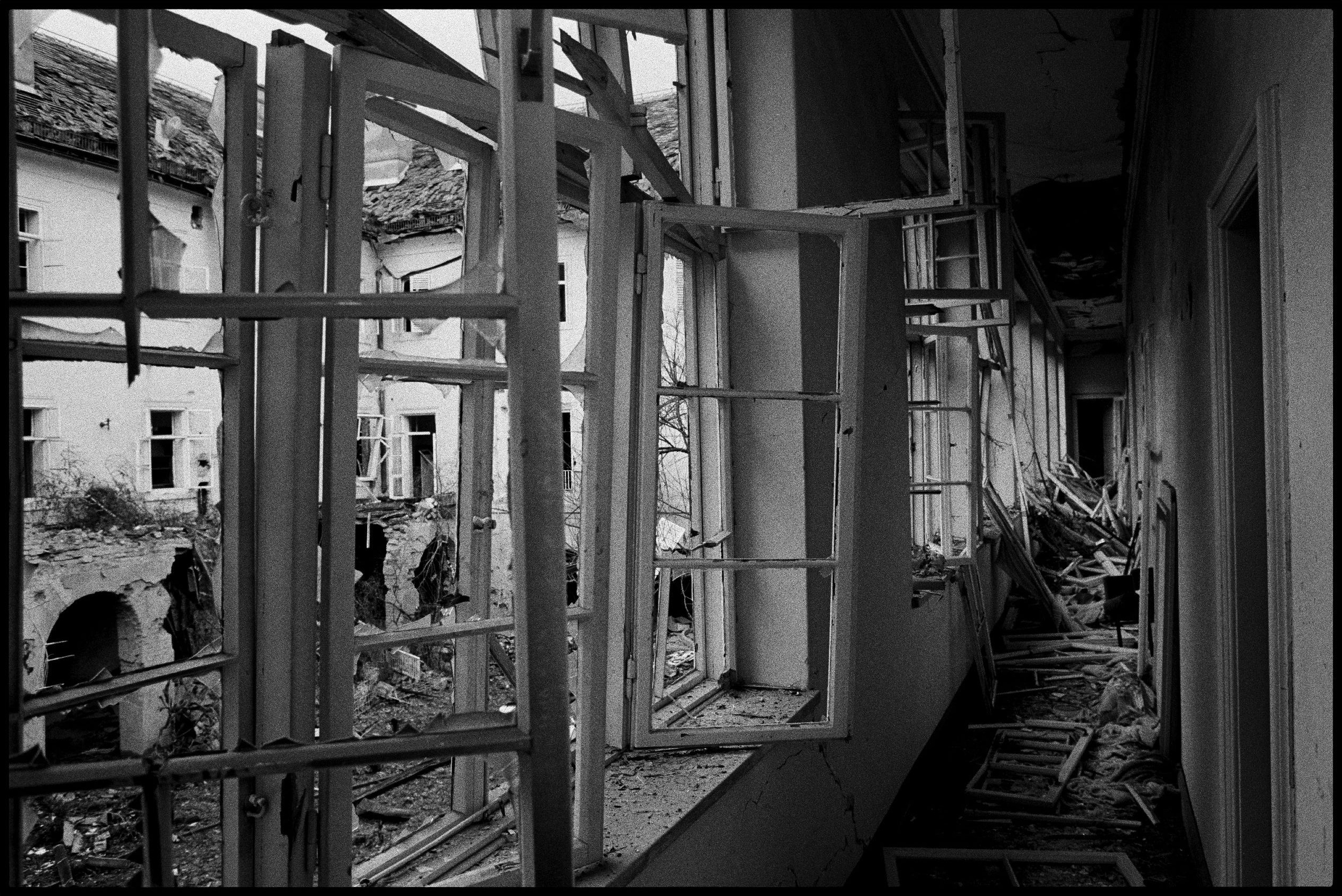
Zoran Filipović’s photography abandons color (and any shine) and remains in the incorruptible relationship between black and white: the black-and-white dialogues through shades of gray nevertheless convey messages in vivid tones. On the street of Vukovar lies a lifeless body. One hand is visible, the other missing, broken like a shop mannequin. The stains on the street appear as if they were ordinary city marks—motor oil or something else. There is no color to tell you that these stains are blood. The gray seems flushed with a lipstick-like hue that gradually turns into a color of absence. These street stains in his photographs are what Roland Barthes calls punctum. In Zoran Filipović’s work, this punctum shifts from the center of the scene toward the soft edges of space, from the drama of the event to the secondary details of the setting. It does not seek to convince us, but the quieter the image, the more shocking the sudden impact.
In the misty desert of Voćin’s land, the displaced, the remnants of ruins: a sfumato of destruction. People stand as if in eternity. As if the Milky Way had fallen upon the ground. Everything is quiet and distant; it is unclear whether time has stopped before or after. And the eye, constantly drawn from the foreground, suddenly finds something unusual: something spiky, like a dead rooster. But there is no one to awaken the morning. It is not a rooster, but a bomb. Thus, a man, in the middle ground, sits with his back turned in Brest, in front of the bridge where the train passes. In a space that is not a foreground, but a pre-foreground on the earth, lie gas canisters. They seem to be the weapons of those who have nothing left to defend themselves. Yes, in Brest, a dog remains. It stands in front of a house that is certainly empty. It shares the same punctum with the detail of another photograph, where behind the bars of a refugee cart, the house drifts away like a soft pillow. In Voćin, a man has returned from a tragedy we do not see, and, perhaps crying, leans against the shelf with flower vases, upon former happiness. A little further, another black-and-white photograph balances, through the short road of death, the killed, the living who buries them, and the earth ready to swallow all. Its soil is both geography and history.
How beautifully Vinkovci burns! And how the light of the fire pierces the complete darkness!
God and truth are in the details: frozen hearts can be read in Filipović’s photographs. It was the Old New Year in Vukovar, 1991. On the snow-covered street, countless footprints are visible, yet no people remain. A small building seems to preserve its ornate façade. Through the window, it is clear that inside there is nothing left. A chandelier, broken at the top, hangs upside down. A bent, sorrowful woman, seeing herself, adds her footprints to the others.
Inside the German edition of Diary of Death, the author placed a photograph of Vinkovci’s burned library. And only his words can stand alongside these images, which is why I quote them:
“Opposite the Craftsmen’s House stood the library. Now it is a grave of burned books. The metal shelves have almost melted from the fire. Upon them lies the folded ash, once the books from which it was born. Books of ash. When touched, they crumble into a formless mass. As if in a fairy tale of cursed lands, where a witch has cast her spell. I imagine a different ending: that the books, from the ash, might, at a touch, return to reality. As I walk among the shelves, my feet sink deep into the ash. I know, I feel, that within this ash is written the hidden answer. I feel a terrible reverence as my foot gently sinks into the noble gray mass, while, with careful movements, I raise fine clouds that rise and vanish freely into the air. I recall similar histories—the Library of Alexandria, destroyed by barbarians, or the books publicly burned in Berlin. History always repeats itself. Have we learned anything?”
The burned library of Vinkovci reveals one of the central motifs of these photographs and of this book: the relationship between humans and ash. “And to dust you shall return”; “not even your place will remember you anymore.” Does this imply that a person no longer remembers their own place, even when they have become the last particle of dust in the final light? Perhaps those particles that always rise around us, even when we try to erase them, are the silent memory, the shroud of the world. Do we honor suffering more through memory or through forgetting? Forgetting is excessively aided, constantly summoned and privileged, without sensing the stirrings of warning. Truth always chooses the harder path.
The harder path was chosen by its witness, Zoran Filipović.
Željka Čorak
Art historian, Translator, and Art critic