Hapur sot nga ora 16:00 - 23:30 | Të dielën mbyllur
Ekspozitë
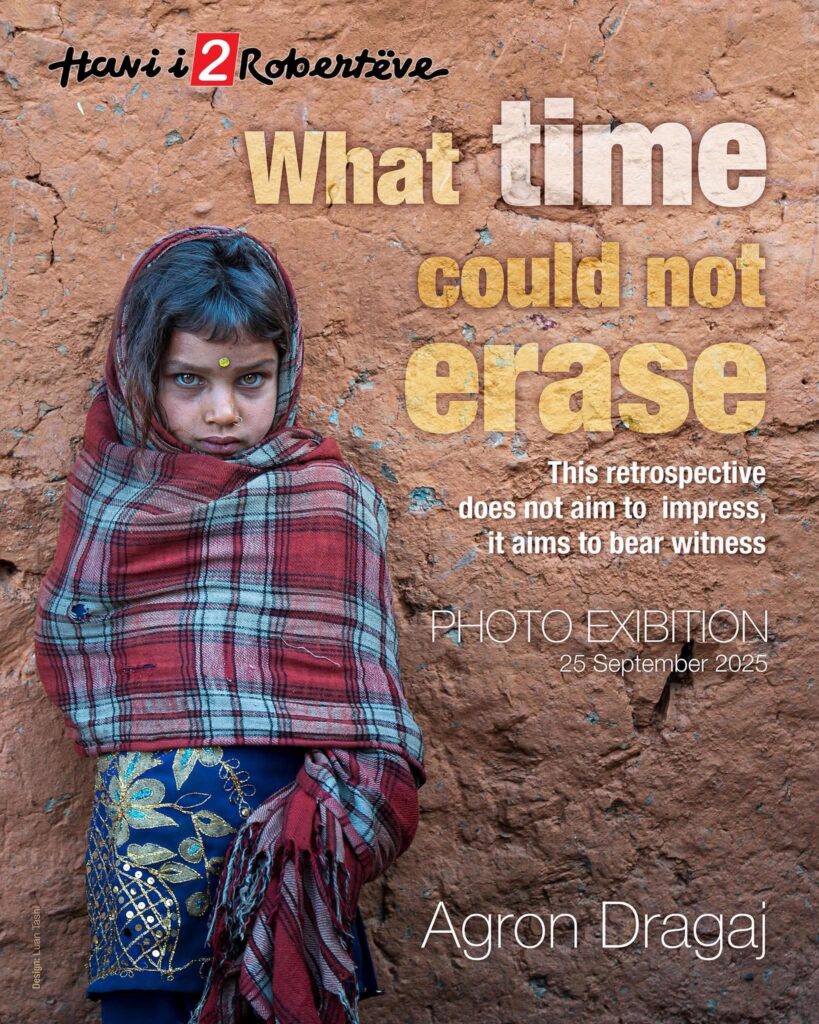
Agron Dragaj: What time could not erase
25 09 2025
“ AJO QË KOHA S’MUNDI TË FSHIJË “
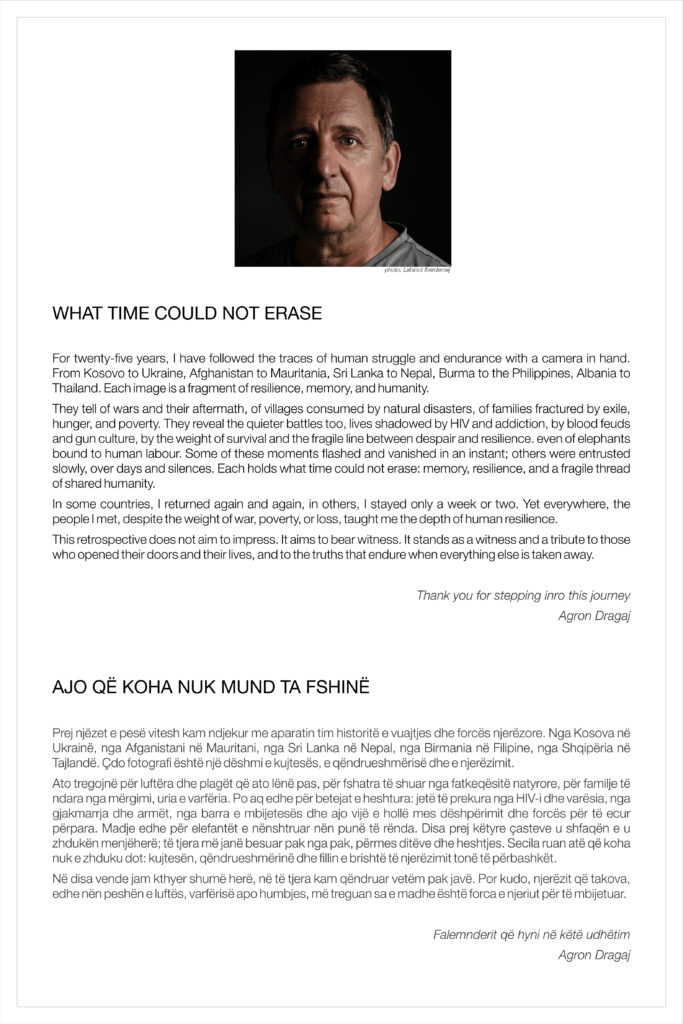
Prej njëzet e pesë vitesh, kam ndjekur gjurmët e përpjekjes dhe qëndresës njerëzore me kamerën në dorë. Nga Kosova në Ukrainë, nga Afganistani në Mauritani, nga Sri Lanka në Nepal, nga Burmа në Filipine, nga Shqipëria në Tajlandë. Çdo imazh është një fragment qëndrueshmërie, kujtese dhe njerëzimi.
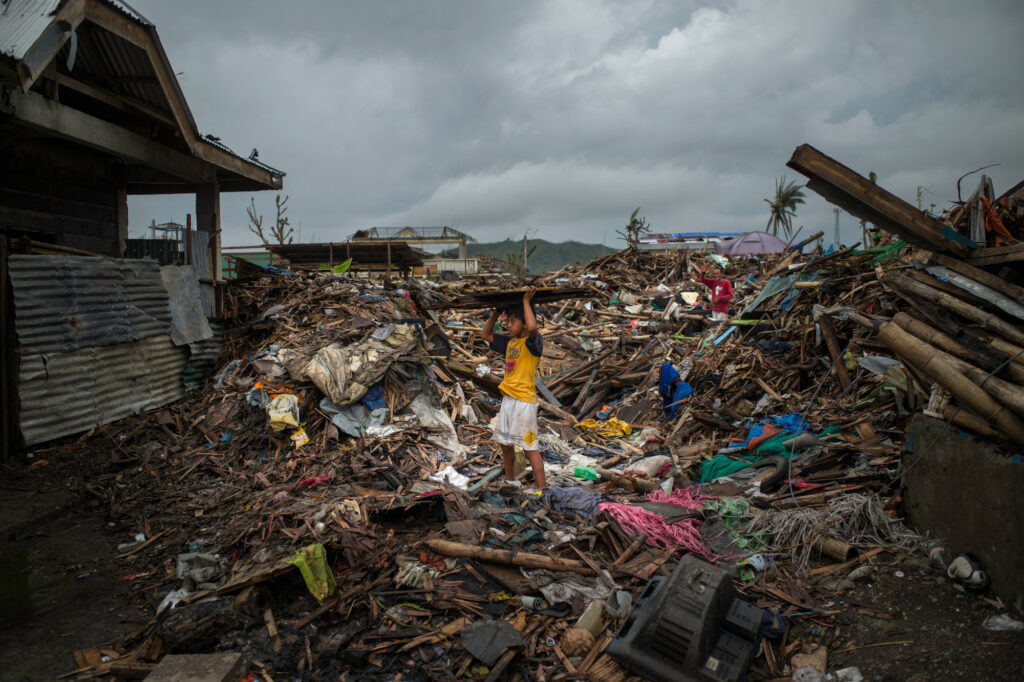
Ato tregojnë për luftërat dhe pasojat e tyre, për fshatra të përpirë nga fatkeqësitë natyrore, për familje të thyer nga mërgimi, uria dhe varfëria. Zbulojnë edhe betejat më të heshtura—jeta e hijezuar nga HIV-i dhe varësia, nga gjakmarrja dhe kultura e armëve, nga pesha e mbijetesës dhe vija e brishtë mes dëshpërimit dhe qëndresës. Madje edhe elefantët e lidhur pas punës së rëndë dëshmojnë për këtë. Disa nga këto çaste u shfaqën e u zhdukën në një të qindën e sekondës; të tjera u besuan ngadalë, gjatë ditëve dhe heshtjeve. Secila mban atë që koha nuk arriti të fshijë: kujtesë, qëndresë dhe fijet e brishta të njerëzimit të përbashkët.
Në disa vende jam kthyer shumë herë, në të tjera kam qëndruar vetëm një javë a dy. Por kudo, njerëzit që takova, pavarësisht luftës, varfërisë apo humbjes, më mësuan thellësinë e qëndrueshmërisë njerëzore.
Kjo retrospektivë nuk synon të impresionojë. Ajo synon të dëshmojë. Qëndron si dëshmi dhe si homazh për ata që më hapën dyert dhe jetët e tyre, dhe për të vërtetat që mbijetojnë edhe kur gjithçka tjetër merret.
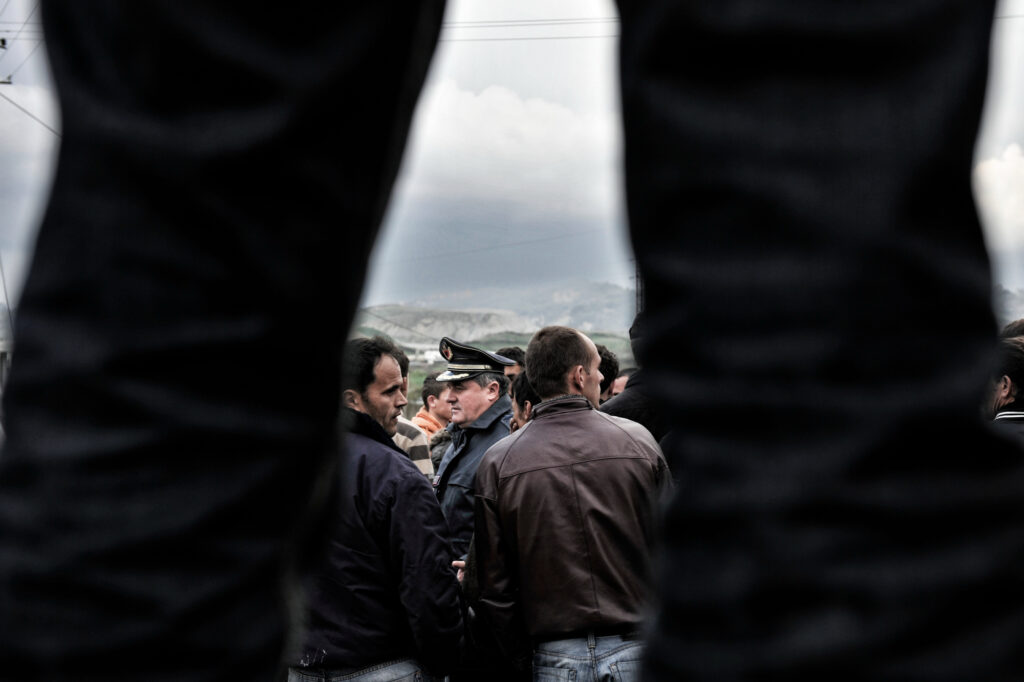
Year: 2008, Vore, Albania.
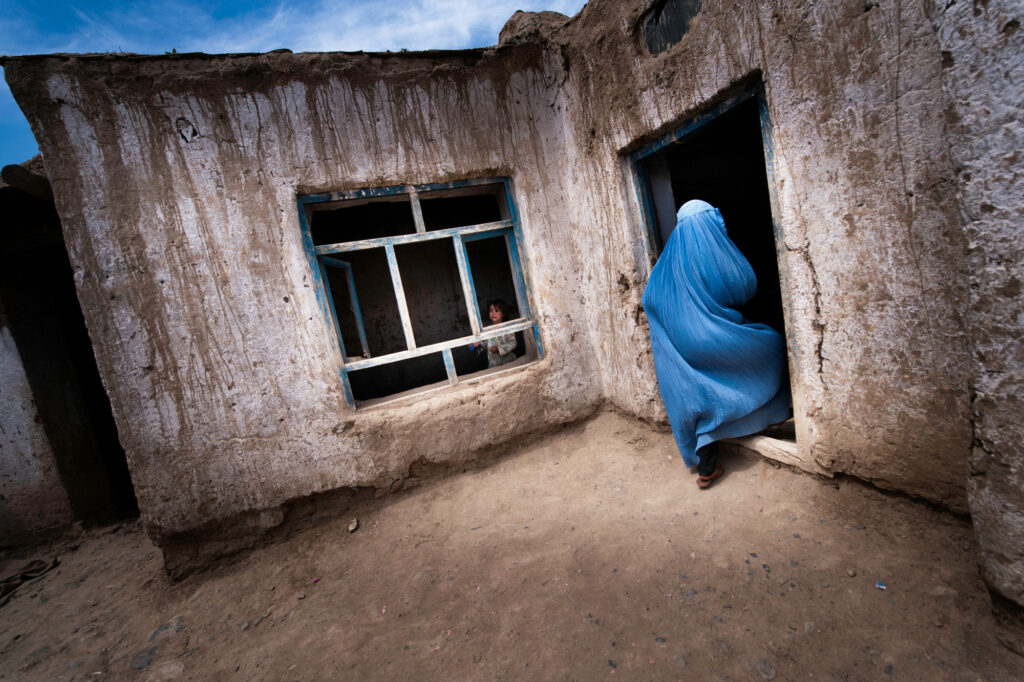
Residents in Vore stage a roadblock on the Tirana – Durrës highway following the ammunition depot blastKabul outskirts, Afghanistan, 2013.
A woman in a blue burqa enters her home as a little girl peers out from a windowless room. Scenes like this reflect the layered realities of Afghan life, where women often navigate both tradition and hardship while children grow up within the confines of poverty and uncertainty.Karen State, Burma, 2008.
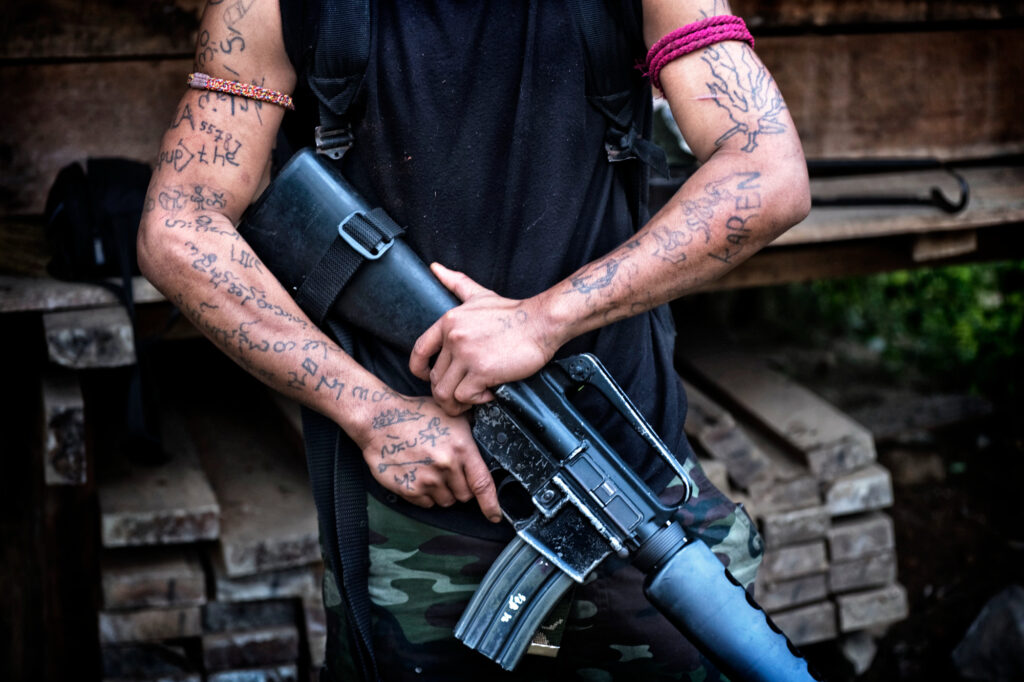
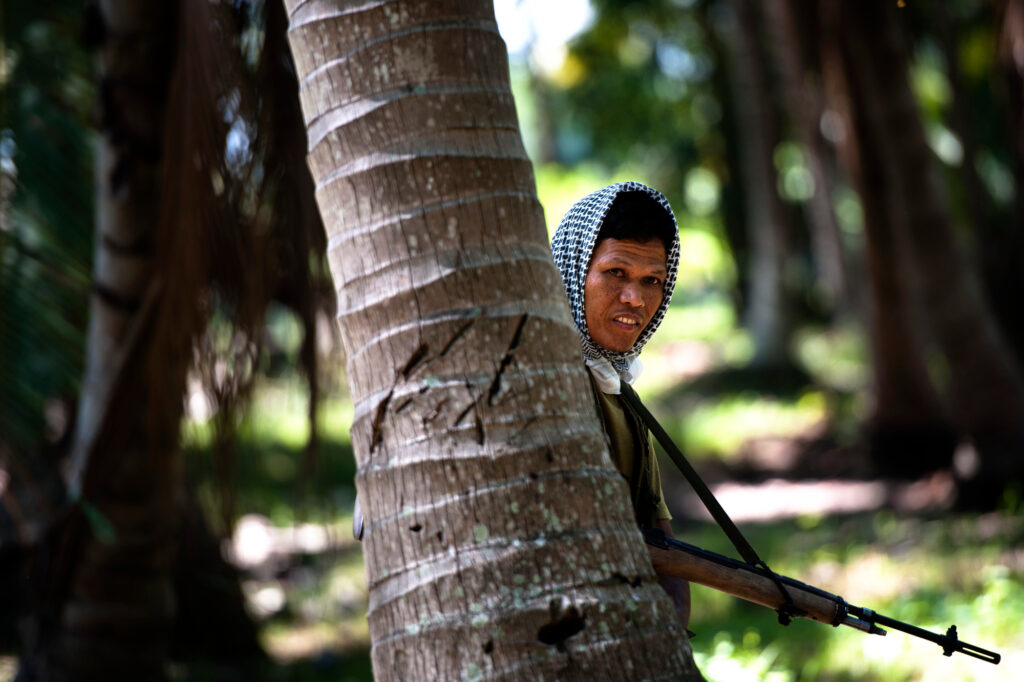
A fighter of the Karen National Liberation Army (KNLA) holds his rifle, his arms inked with sacred texts and protective charms. For many Karen fighters, these tattoos serve as both spiritual armour and a declaration of identity in their decades-long struggle for autonomy.Prekaz, Kosovo, 2008.
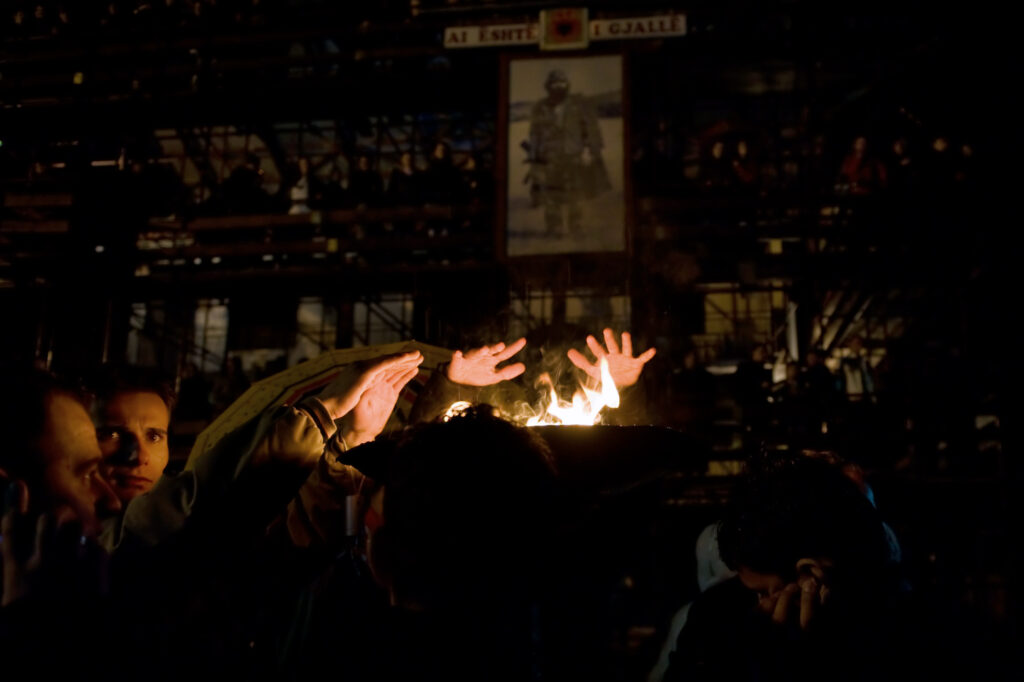
At the “Night of Fire” commemoration, attendees warm their hands over open flames in front of the Jashari family home, preserved as a museum with its bullet-riddled walls intact. Above, a portrait of Adem Jashari bears the words “He is Alive,” honouring the Kosovo Liberation Army commander killed in 1998.Aleg, Mauritania, 2015.
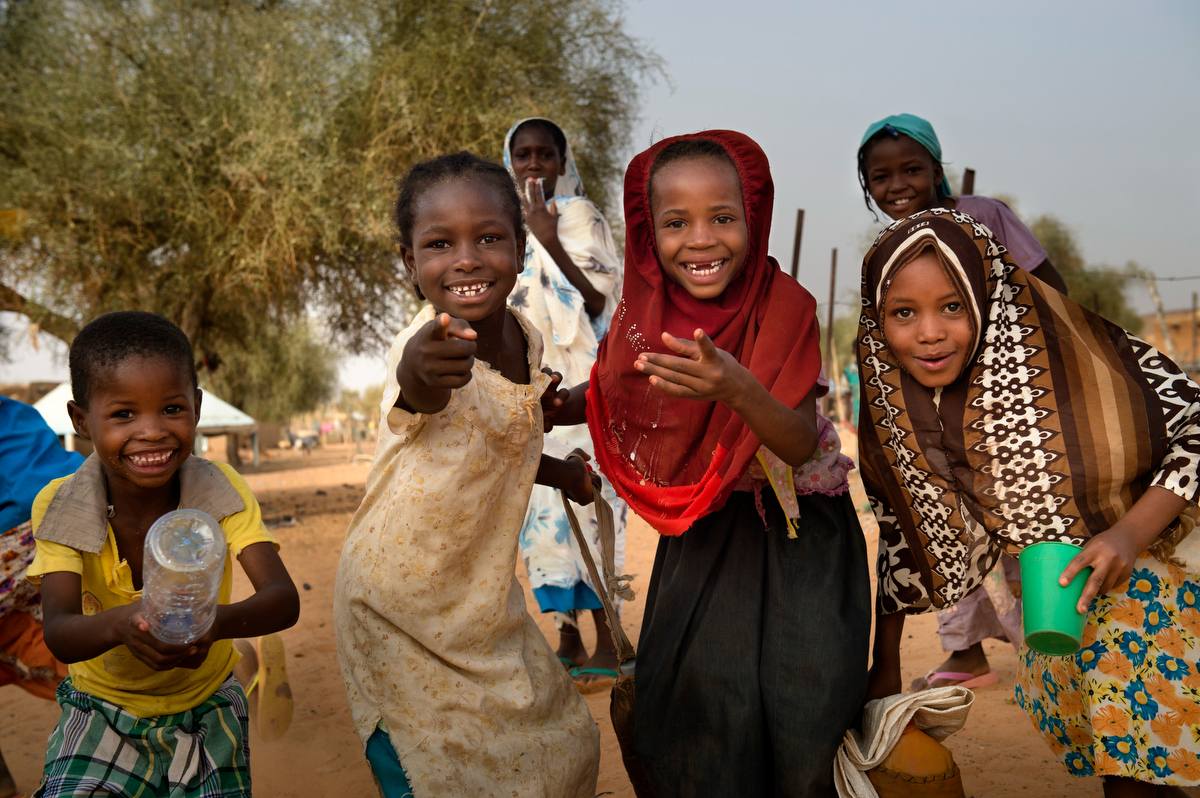
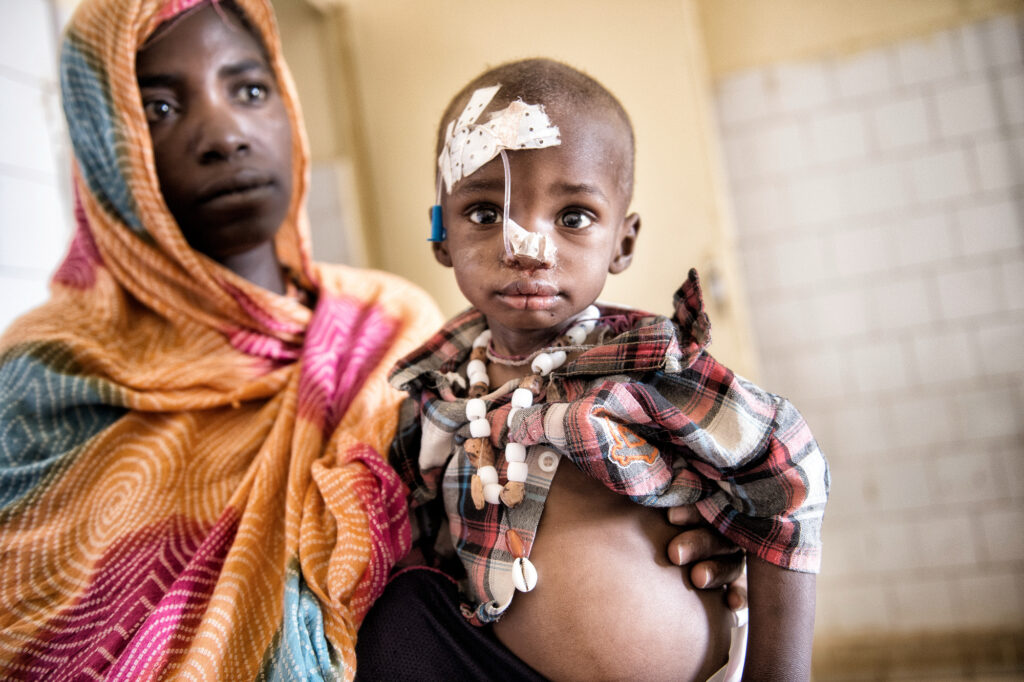
A severely malnourished child, 22-month-old Olud Mohammad, receives care at a nutrition unit in Aleg, Mauritania. A nasogastric tube is used for feeding and administering drugsChitwan District, Nepal, 2012.
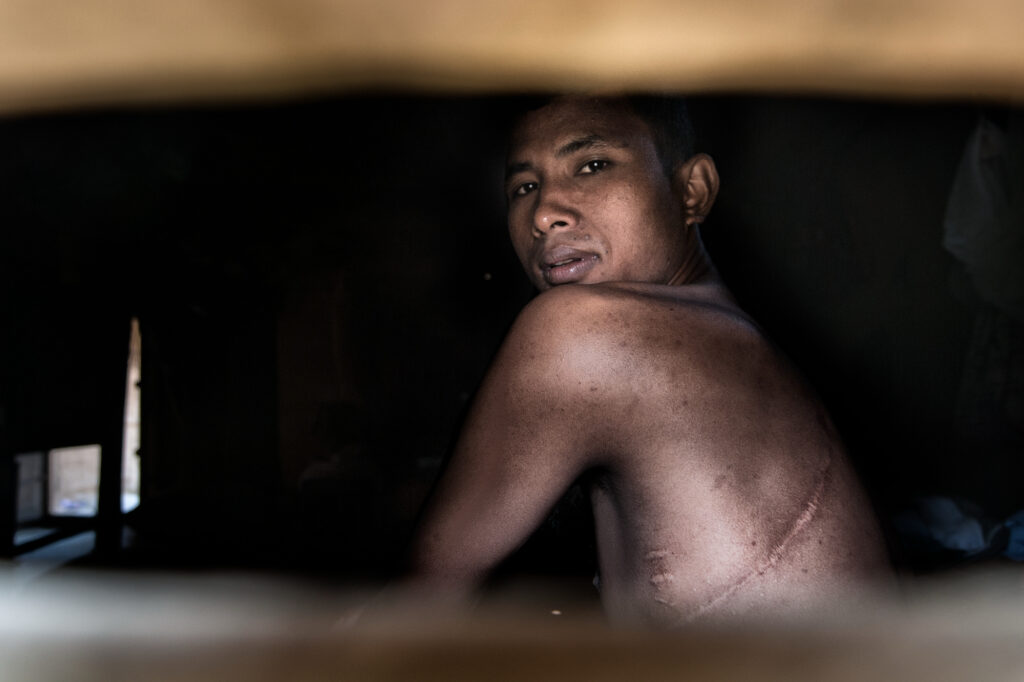
Mahesh Chowdary, 30, from Shirkanagar, Jabka, bears the scars of his years as a Maoist fighter. He joined the People’s Liberation Army in 1999 and was injured in the 2004 Krishnabhir battle, about 40 kilometers from Kathmandu. After spending a year in prison, he was released as part of the peace process. Today, he remains active as a cadre in the Maoist splinter group CPN-M.Mangalsen, Achham, Nepal, 2013.
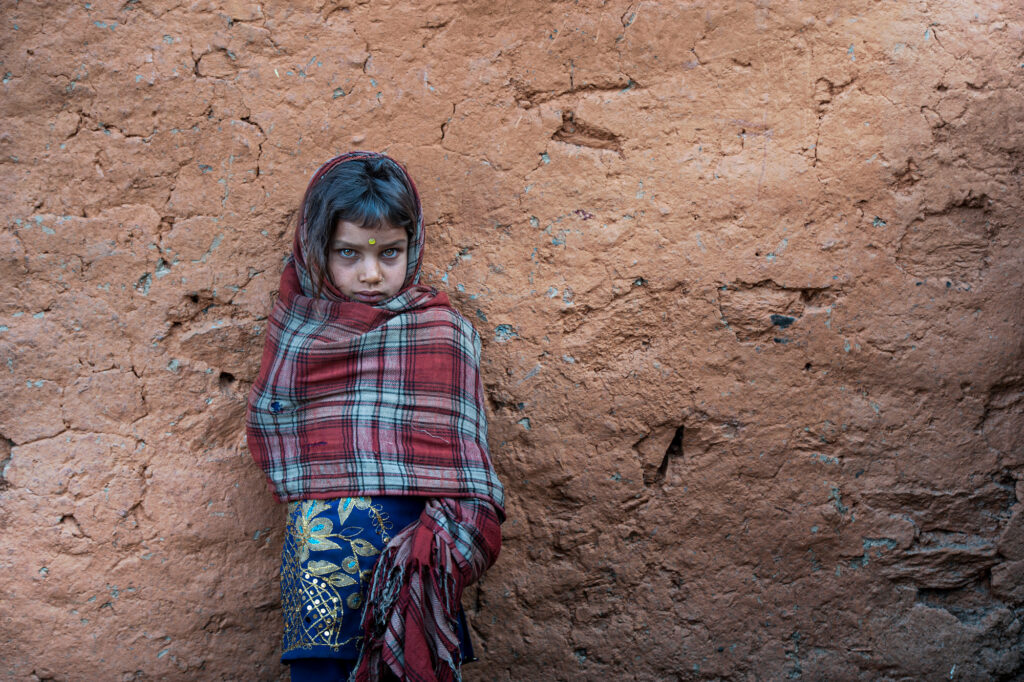
A young girl stands against the mud wall of her home in a district scarred by poverty and migration. Achham, one of Nepal’s poorest regions, has been deeply shaped by the outward migration of men, leaving behind families with stark gender imbalances. During the Maoist insurgency (1996–2006), the district also witnessed heavy conflict, further compounding the struggles of women and children who remain at the centre of survival.D3Bllankathurai muguthuwaram, Trincomalee Sri Lanka
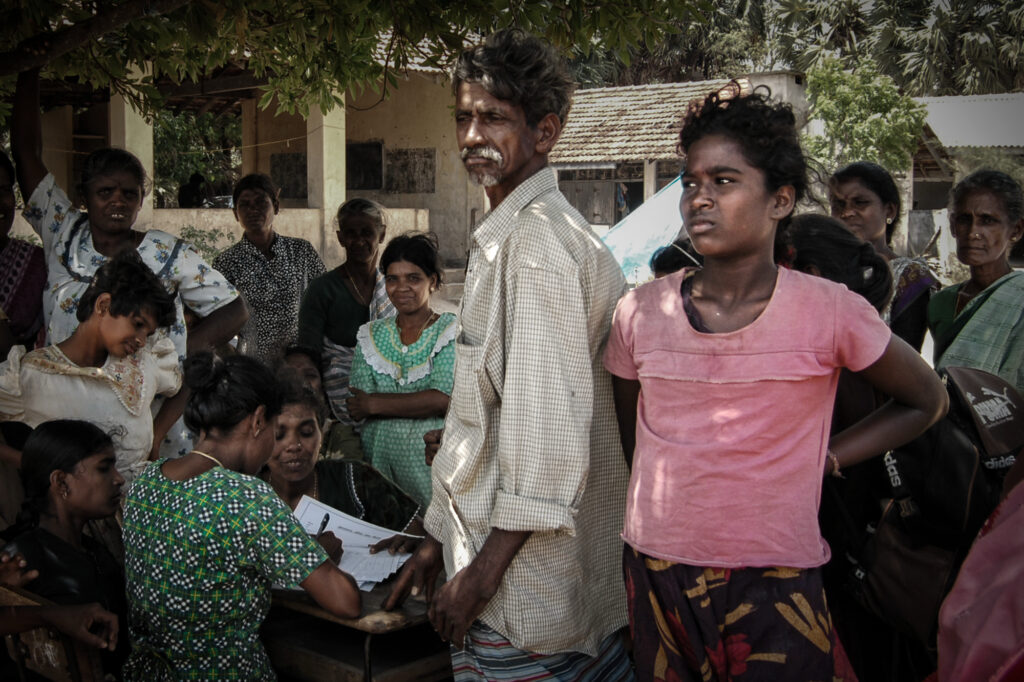
Displaced family who arrived from Sampur being registered at local school which is turned into a refugee camp in Illankathurai muguthuwaram.
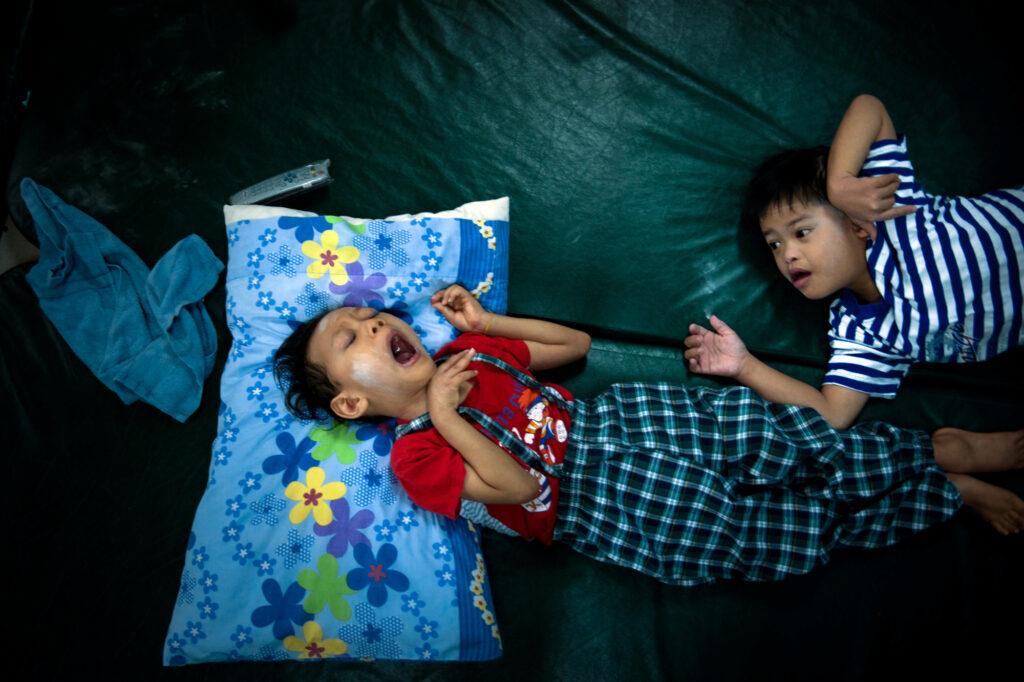
Subsequent to air raids and sheeling by the Sri Lankan Army in Sampur and Eachchilampattai areas, more than 35,000 people were forced to flee in different areas of Tricnomalee district. Some 11,000 were displaced to Eachchilampattai area , which is controlled by LTTE.The Camillian Home for Children with Disabilities, founded by The Camillus Foundation in 2008 and located in the outskirts of Bangkok, is a non-profit organisation providing shelter and care for mentally and physically disabled children, including those who are HIV/AIDS positive.
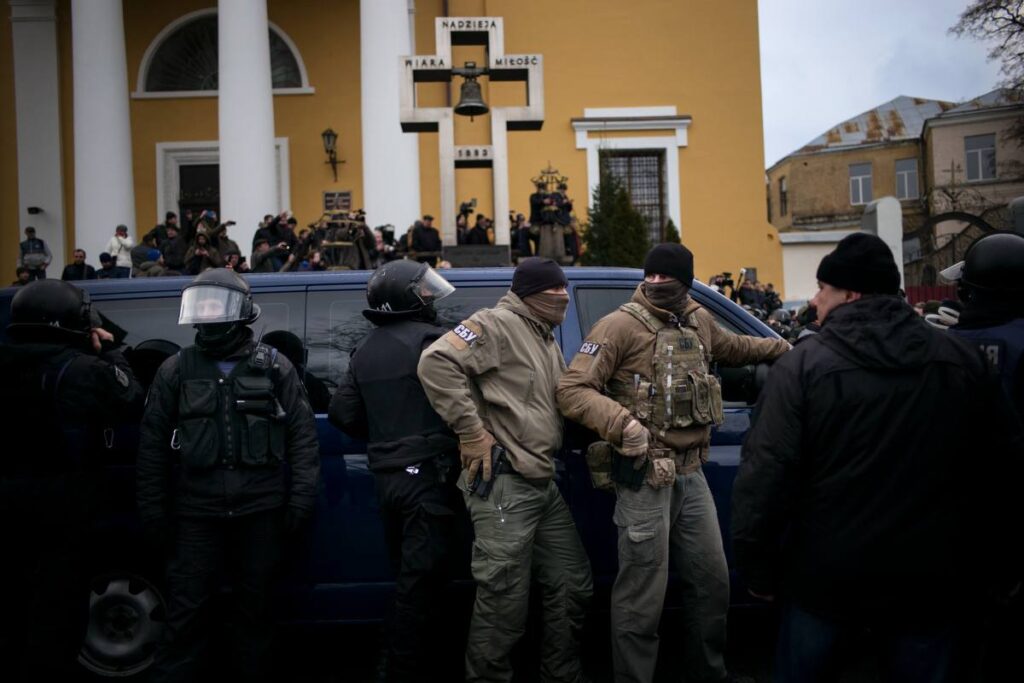
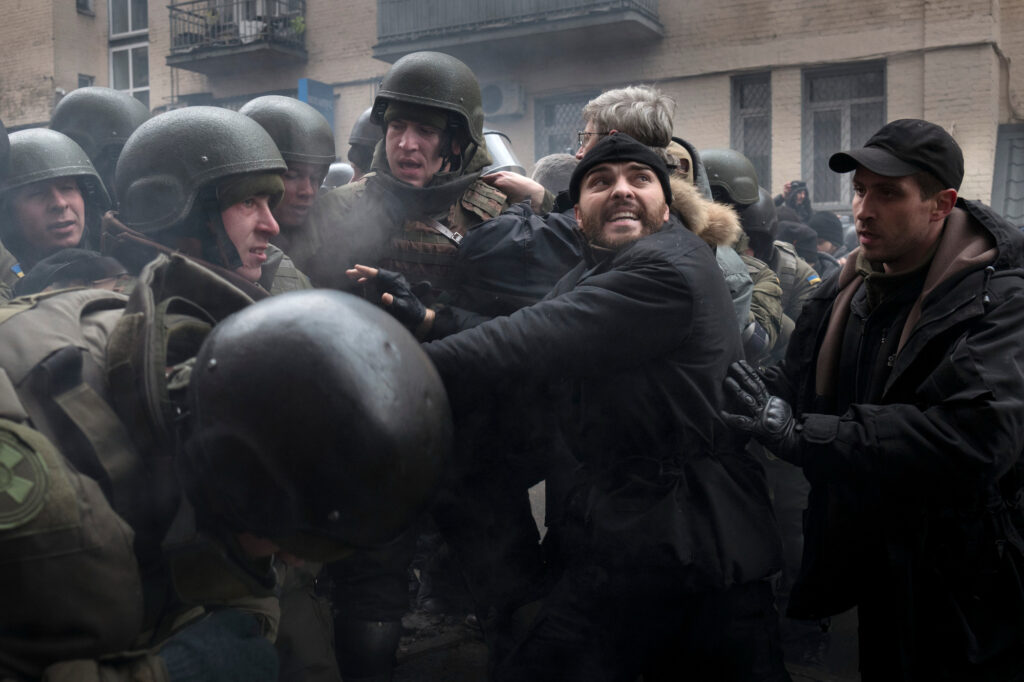
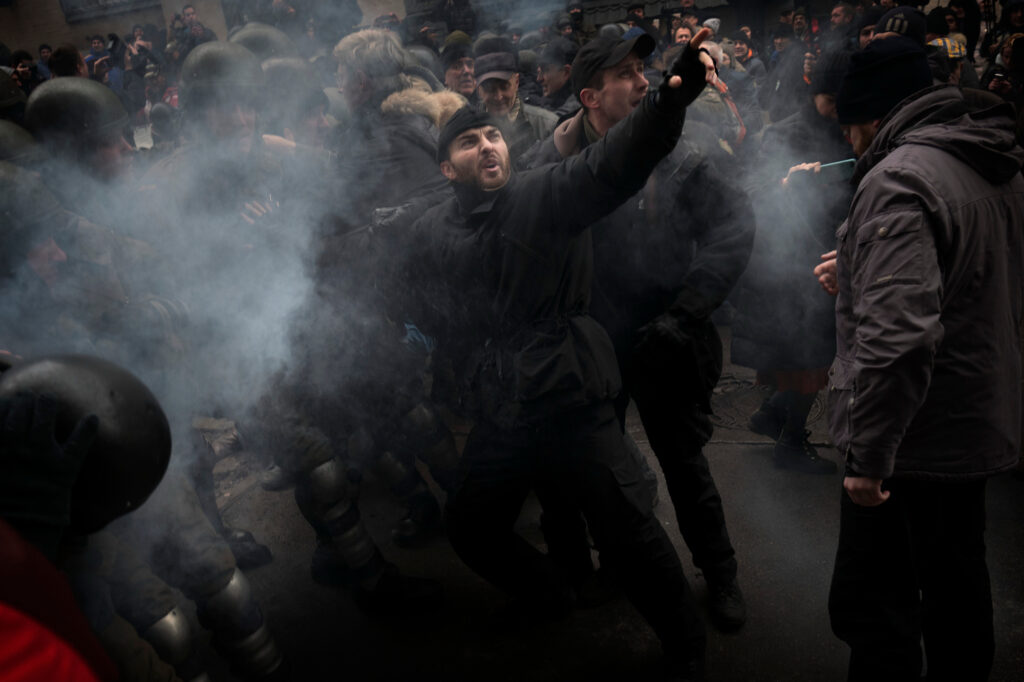
As well as providing education and rehabilitation programs for both live-in and daycare patients, Camillian Home provides a loving family environment, which is often denied to those with disabilities and HIV. Social stigma, lack of support and poverty create barriers to treatment and acceptance – through advocacy and education in collaboration with government programs, other non-profit shelters in Thailand as well as community leaders in the area, Camillian Home hopes to eradicate the discrimination and neglect that many disabled persons suffer as a result of these barriers.Supporters of former Georgian president clash with police as they attempts to block the police van in which he is transported after being arrested.
Ukrainian security services on Tuesday arrested former Georgian president Mikheil Saakashvili after he climbed onto the roof of his apartment building and addressed supporters during a police raid. The Ukrainian Security Service (SBU) said Saakashvili had been arrested on charges of assisting criminal organizations.
Saakashvili left Georgia in 2013 after serving as president for nearly a decade, and later was appointed governor of Ukraine’s Odessa region. But he quit in 2016, complaining that his efforts to root out corruption were suffering from official obstruction.
His Ukrainian citizenship was revoked this year while he was out of the country, but he returned in September after supporters broke through a police line at the Polish border.
Ekspozita është përkrahur nga Ministria e Kulturës, Rinisë dhe Sportit