“The Left is dead, long live the Left,” was a dialectical maxim oscillating between cynicism, fatalism, and a certain optimism. It had been coined years earlier within leftist circles, as an attempt to revive and reaffirm the ideology.
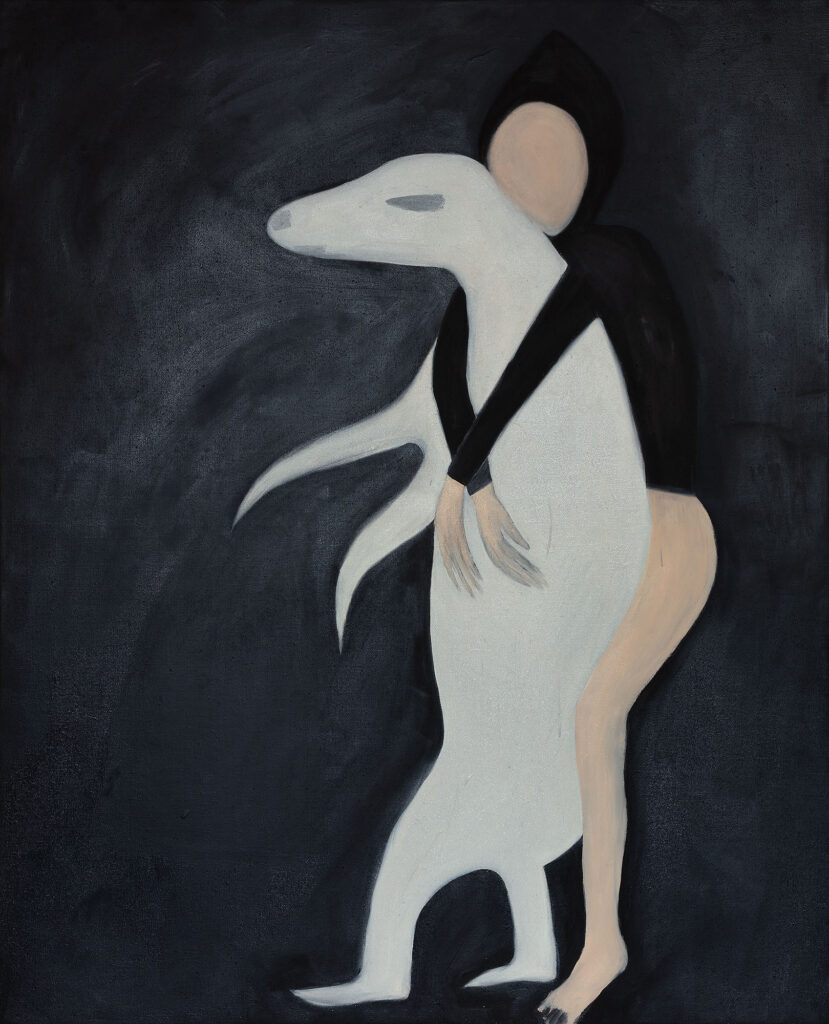
From my own perspective as an art enthusiast—and from my concern about the state of art today—it feels like the same maxim can be transposed here, with just a slight shift: Arti ka vdekur, rrnoftë arti! – A phrase that aptly describes the condition of art. Much of the last century, across much of the world, felt like a déjà vu of the Middle Ages, where artistic freedom was eclipsed—tightened by belts, straps, and the dictates of the Church. Like every other sphere, art and the artist were subjected to ecclesiastical hegemony. Artistic creation, rather than existing within the dynamic between artist and audience, was filtered first through the lens of control, almost panoptical in nature, where the Church, as authority, defined the models.
That same approach to control was elegantly and, of course, invisibly transferred into the last century, where nearly every form of artistic expression was repurposed in service of dominant ideologies. One type of art was labeled socialist realism, built on the ambition that it reflected the social and cultural conditions of the time. But the core function of art does not reside in the spectacles of contemporary art, which under the illusion of “freedom” and new stylistic choices has been ensnared in today's ideology. This degradation is no different from the state in which we find figurative art today. The art that Hegel once described as playing a role in expressing the Absolute Idea no longer represents an idea, nor a soul, nor emotion. With some exceptions here and there, most artworks are stripped of their primary aesthetic category: beauty. Throughout history, art and artists have walked as political agents with emancipatory ambitions. Art moved in its own way, subversively, making liberation and democratization its cause. But today, it is no longer so. Consequently, Plato’s proposition to “excommunicate” art or more precisely, the artist as useless, seems increasingly legitimate.
Art for the market, not for the soul? Exhibitions that are seen, but not felt
In recent years, exhibitions in both public and private galleries in Prishtina and Tirana have multiplied. Art appears more "alive" than ever: openings, vernissages, Instagram photos, artist interviews. But what remains afterward? Almost nothing.
Unfortunately, the power of these cultural events is negligible when considering their ability to establish real connection with the public. With few exceptions, they function more as luxury goods for galleries and investors. In fact, they help maintain the art world’s already stagnant condition, if not contribute to its further decline.
Is art becoming elitist?
Many exhibitions are wrapped in overly complex conceptual language, intelligible only to a small circle of academics or curators. This excludes art “outsiders”: enthusiasts, ordinary citizens, curious youth. Art no longer communicates with the public, but with an internal market where what matters is who knows whom.
Art as investment, not as message
In this commodified incursion, art has become one of the most vulnerable domains. In many cases, artworks are not created to challenge thought or question reality, but to circulate: to enter collections, travel to international exhibitions, or be sold as the next “new piece.” Artists often feel compelled to produce works that “look good on a wall” rather than say something meaningful.
Public galleries have often turned into transient display cases, rather than spaces that nurture artistic discourse. Exhibitions are rarely accompanied by discussions, workshops, or processes that engage the public.
Art today is experienced as an event, not as a felt experience.
Vanesa Zhugolli is a journalist at TV Klan Kosova
The blog was published with the financial support of the European Union as part of the project “The development of art criticism”. Its contents are the sole responsibility of Hani i 2 Robertëve and do not necessarily reflect the views of the European Union.