Memento’s Way
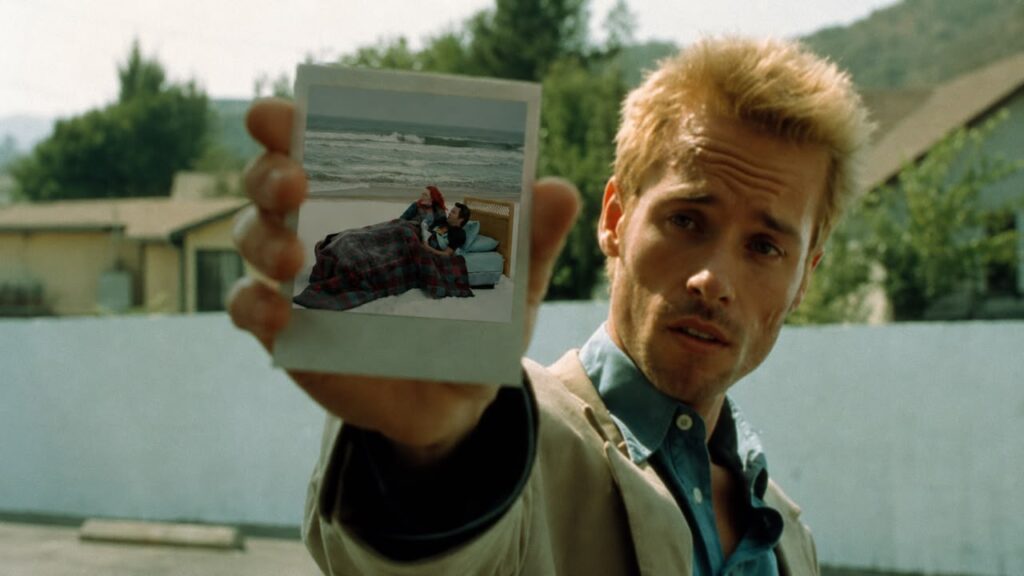
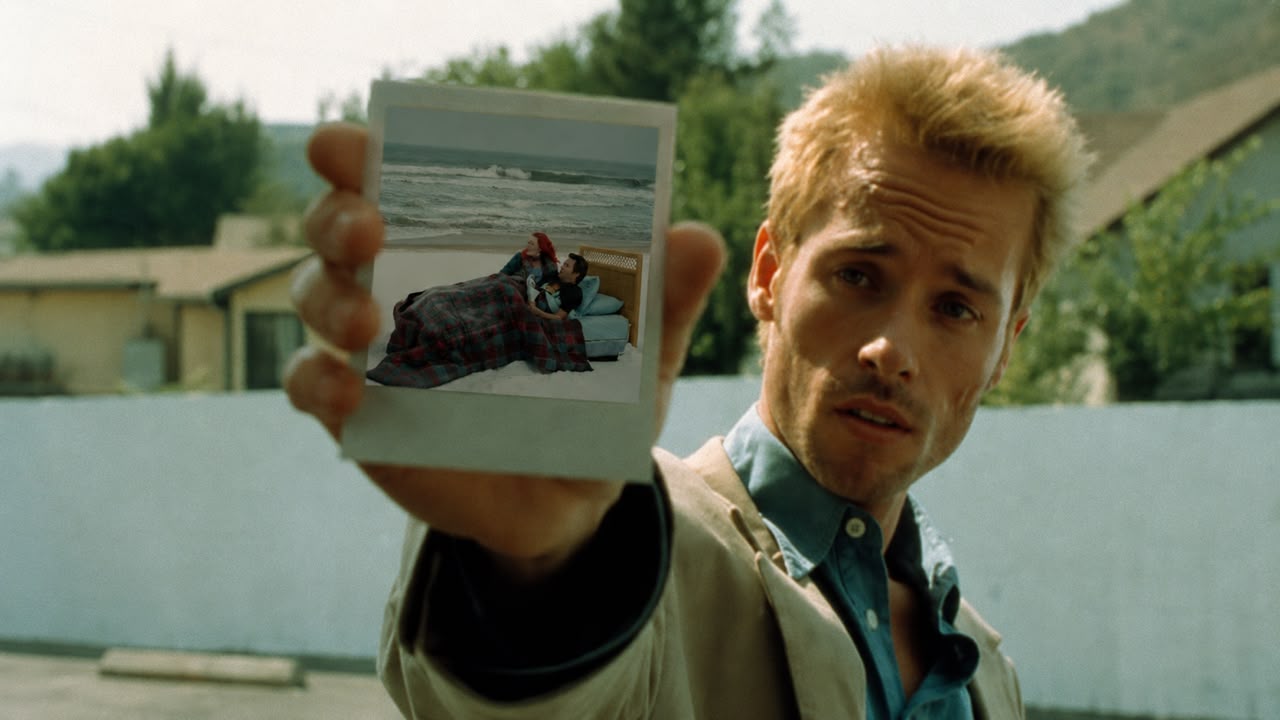
One of the most innovative and layered narrative structures in modern cinema can be found in Memento (2000), directed by Christopher Nolan. The film immediately challenges the audience's expectations by presenting its main narrative in reverse chronology. Instead of events unfolding from beginning to end, the story moves backward, with each scene occurring before the one that preceded it. At the same time, Nolan introduces a second narrative strand composed of black and white sequences that progress forward in chronological order. These two timelines gradually move toward one another and finally intersect at the film’s climax, creating one of the most memorable narrative constructions in contemporary film. As a viewer of the film you have to be present in it and watch how all roads lead back to one being.
What makes this structure particularly remarkable is how closely it mirrors the experience of the protagonist, Leonard Shelby. Leonard suffers from anterograde amnesia, a condition that prevents him from forming new memories after a traumatic incident. As viewers, we are placed in Leonard’s position. We enter situations without knowing what happened moments before, constantly searching for clues and explanations. Every scene feels incomplete because we lack the context that would normally guide our understanding. This creates a unique relationship between the audience and the protagonist; rather than observing Leonard’s confusion from a distance, we experience it alongside him. No matter what scene, place, people or new version of oneself, we are constantly searching for the same thing underneath it’s peace, meaning and connection, and that is a place to belong inside our own existence.
The fragmented structure also transforms the audience into active participants. Instead of passively receiving information, viewers must constantly reconstruct the narrative, connecting pieces of information and questioning every revelation. As the story progresses, it becomes increasingly clear that Leonard may not be a reliable source of truth. His memories are unstable, his perception is selective, and there is evidence that he may consciously manipulate the information he records for himself. This introduces additional narrative layers that blur the line between truth and fiction. By the end of the film, viewers are left questioning not only what happened but also whether objective truth is even possible. The structure therefore becomes more than a stylistic choice; it serves as a direct reflection of the film’s central themes of memory, identity, self-deception, and the human desire to create meaning from fragmented experiences.
Eternal Mind
Another film that demonstrates the power of layered narrative construction is Eternal Sunshine of the Spotless Mind (2004), directed by Michel Gondry. Unlike traditional love stories that follow a straightforward chronological progression, the film unfolds through a complex network of memories, dreams, and subjective experiences. Much of the narrative takes place inside the mind of Joel Barish as a medical procedure gradually erases his memories of his former partner, Clementine. As these memories disappear, the audience travels through Joel’s subconscious, witnessing moments from the relationship in a fragmented and often disorienting order.
The film’s structure reflects the way human memory actually functions. Memories are rarely organized in a neat chronological sequence; instead, they are connected through emotions, feelings, and personal significance. One memory triggers another, locations merge together, and moments from different periods of life overlap unexpectedly. Gondry visually represents this psychological reality by allowing scenes to collapse into one another, with characters suddenly appearing in impossible locations or environments dissolving before our eyes. The result is a narrative that feels dreamlike, unstable, and deeply personal just like a dream.
What makes the film especially powerful is that the audience experiences the process of forgetting alongside Joel. Rather than simply being told that memories are disappearing, viewers watch them vanish in real time. Important moments fade away, faces become blurred, and meaningful places cease to exist. As Joel relives his relationship with Clementine, he begins to recognize not only the pain that led him to erase her but also the beauty and significance of the memories he is losing. This creates a profound emotional tension because the audience understands that even painful memories contribute to personal growth and identity.
The film operates on multiple narrative levels simultaneously. There is the reality of Joel’s present life, the memories being erased, and the subconscious spaces where Joel attempts to hide Clementine from the procedure. These layers frequently overlap, making it difficult to distinguish between reality and imagination. Yet this complexity serves an important purpose. It allows the film to explore larger questions about love, memory, and human connection. Rather than presenting memory as a simple record of past events, Eternal Sunshine of the Spotless Mind portrays it as an essential part of personal identity. Through its fragmented and emotionally driven narrative structure, the film demonstrates that even the most painful memories shape who we are and that forgetting them may mean losing an important part of ourselves. Every path we take eventually circles to the relationship we have with ourselves.
Arbër Rudi

Arbër Rudi is a student from Kosovo pursuing a Master’s degree in English Literature at the University of Prishtina. He also analyzes films from time to time.

The blog was published with the financial support of the Swiss Agency for Development and Cooperation (SDC) as part of the project “Empowering Cultural Expression.” Its contents are the sole responsibility of Hani i 2 Robertëve and do not necessarily reflect the views of the Swiss Agency for Development and Cooperation.