One of my earliest memories is made of light.
Perhaps I was not seven or eight, but younger, standing near a window in our home in the village. Perhaps the window was larger than I remember, or smaller, or framed in a color that has since faded from my mind. Perhaps the room too was bigger than I remember. The afternoon sun stretched across the carpet, and dust floated in the air like tiny stars. I wonder if the light fell as gently as I imagined, or did I soften it over time? Perhaps the dust in the air did not look like tiny stars, but I needed it to.
I don’t remember voices or faces clearly, except that of my mother’s. Perhaps the faces around me were clearer then, but time has blurred them, leaving only the outline of my mom’s presence. Was it really that silent, or has my memory erased the ordinary sounds of the house? Perhaps there were voices in the house, quiet conversations between my mom and my sisters, or distant movements of someone else around the house.
I can almost see the curtain moving slightly, lifting and settling with a breeze that slipped through a partly opened window. The smell of clean laundry and wood lingered in the room. Somewhere, a floorboard may have creaked. A clock might have ticked steadily from another room. The sunlight pooled on the floor in a bright rectangle, touching the edge of a chair and climbing halfway up the wall. I imagine myself standing still, one hand resting against the window frame, watching the dust drift lazily through the beam of light. The particles moved slowly enough to follow with my eyes, rising and falling as if they belonged to a world entirely separate from the one around me.
When I try to see more, the scene blurs. I am just a small figure standing there, watching.
This fragment connects to a much clearer memory from primary school, when I was about nine or ten. Perhaps I was older than that. I was sitting at my desk, writing a type of essay while other children rushed to finish. Perhaps the essay I was writing was not as important as it feels now. Perhaps it was ordinary, one of many tasks, and I have given it weight because it fits the story I am telling about myself.
That afternoon light fell across the classroom desks, and I felt deeply focused, almost separate from everything around me.
The classroom smelled faintly of pencil shavings, paper, and chalk. Chairs scraped against the floor as students shifted impatiently in their seats. Pages turned. Someone tapped a pencil on a desk. Another student whispered to a friend before quickly returning to their work. The teacher moved between the rows, stopping occasionally to glance over a shoulder or answer a question. Yet all of those movements seemed distant, softened around the edges. My attention remained fixed on the blank spaces between sentences, on finding the right word before allowing myself to continue.
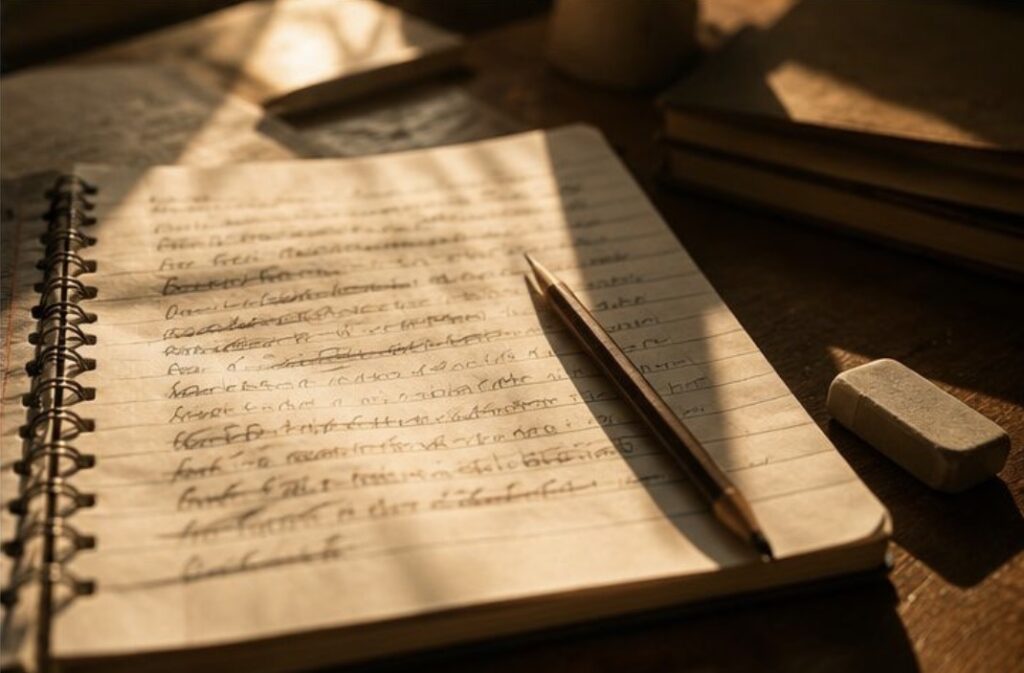
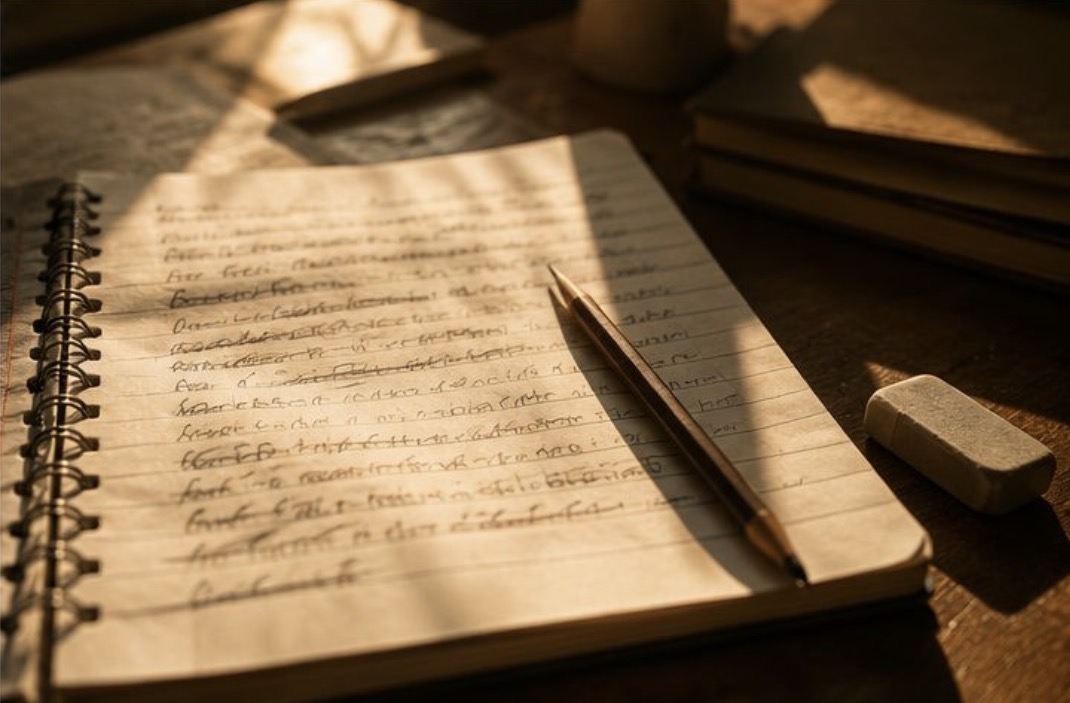
I remember pressing the pencil harder than necessary, leaving darker marks on the page. Some lines were crossed out. Others were squeezed into the margins when I ran out of room. The paper carried traces of hesitation: erased words, smudges, and corrections. While others seemed eager simply to finish, I kept returning to the same sentence, reading it silently and changing it again. Outside the classroom windows, the afternoon sun illuminated the playground, but my eyes rarely left the page.
Perhaps the classroom was small and louder, and I have removed that noise to make space for the feeling of focus. The light might have fallen at another angle, but I have aligned everything as it matched my memory by the window.
What remains strongest is not the assignment itself but the sensation of being absorbed by it. The sounds of the classroom faded in and out like distant waves. A classmate may have asked me a question that I barely heard. The bell may have rung before I expected it. Time seemed to move differently during those moments, measured less by minutes and more by completed sentences, erased mistakes, and the satisfaction of finding words that felt almost right.
I sometimes wonder: was the child by the window already becoming the person who would later sit quietly and write? Or am I shaping these memories into a pattern that makes sense now? Memory has a way of arranging the past.
Between these two memories, years have disappeared, yet the feeling seems strangely similar. In both scenes, there is light. In both scenes, there is a sense of watching rather than participating. The child by the window watched dust move through sunlight. The student at the desk watched thoughts take shape on paper. Perhaps the connection exists only because I have placed it there. Perhaps I have chosen these moments from hundreds of forgotten ones because they seem to belong together.
The window feels metaphorical to me - a frame between inside and outside, self and world. Perhaps I was simply staring at dust in the sunlight. Yet now I see that moment as the beginning of awareness, of observing before speaking.
Even now, when sunlight catches floating dust in a room, I find myself pausing for a second longer than necessary. The sight feels familiar without fully revealing why. It carries the echo of something remembered and something imagined. The scene returns not as a complete picture but as scattered fragments: the warmth of sunlight on the floor, the outline of a window, the distant presence of my mother, the feeling of standing quietly and noticing.
Perhaps I am shaping these fragments into something that explains who I am, rather than recalling them as they truly were.
Edmonda Bajraktari
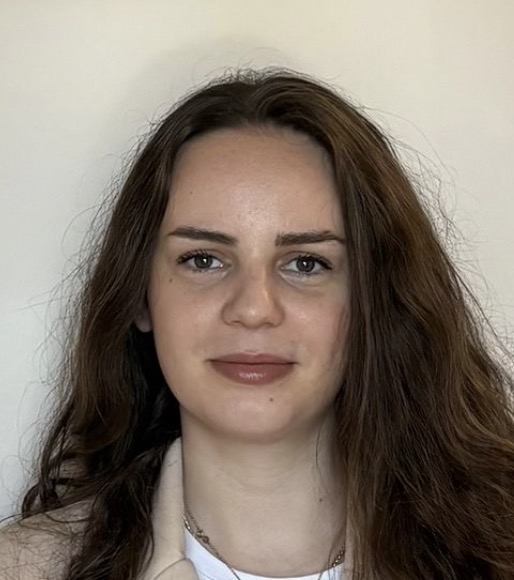
Edmonda Bajraktari, student of English Language and Literature. Passionate about reading, very often about creative writing as well. Works as an English teacher and she likes the feeling of teaching someone new things, especially new words.

The blog was published with the financial support of the Swiss Agency for Development and Cooperation (SDC) as part of the project “Empowering Cultural Expression.” Its contents are the sole responsibility of Hani i 2 Robertëve and do not necessarily reflect the views of the Swiss Agency for Development and Cooperation.