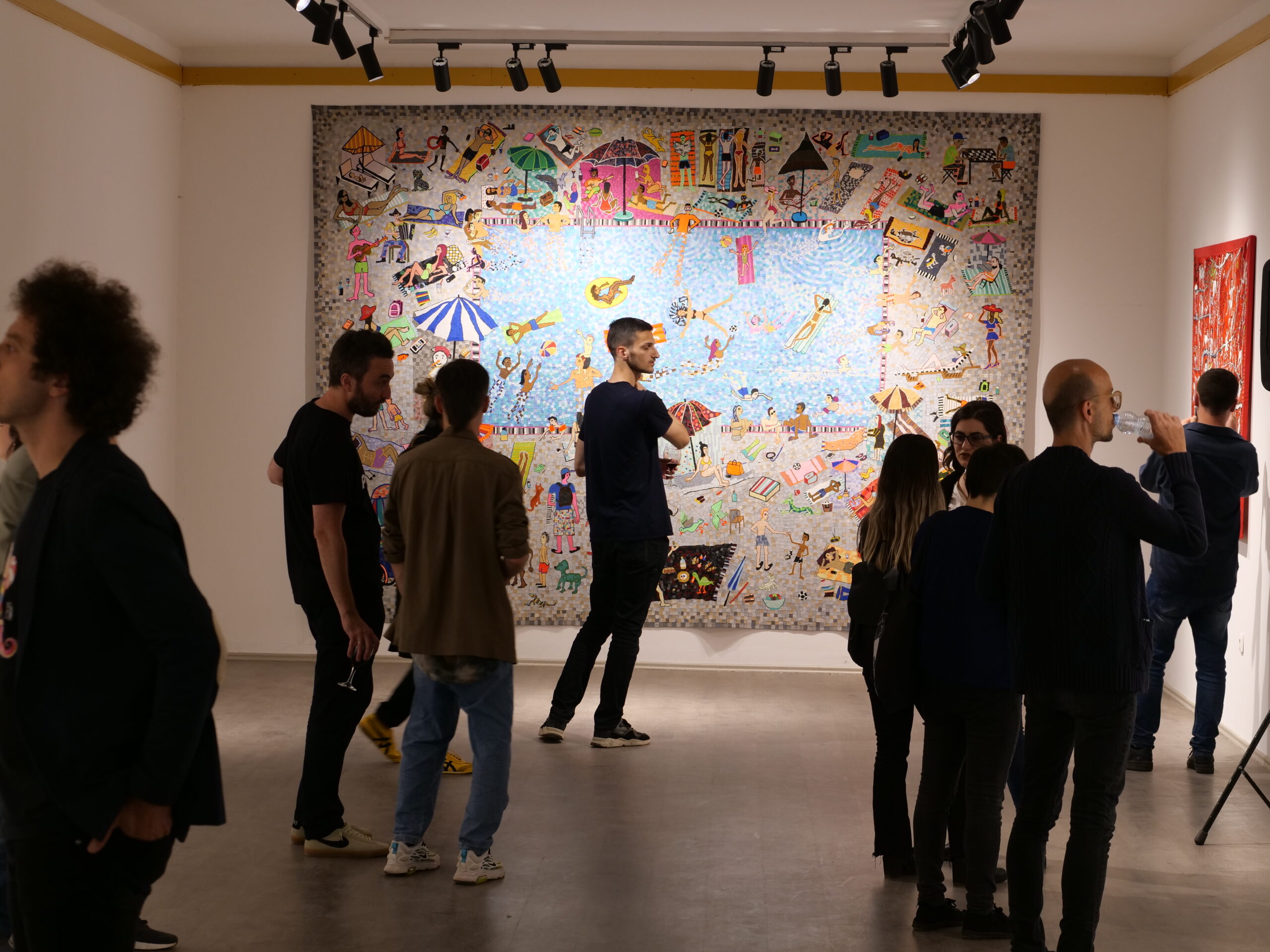
In discussions about art and culture in Kosovo, the same feeling is often repeated: culture exists, but not as a complete system. It functions as a series of separate spaces that survive more through individual initiatives than through a stable structure.
In this landscape, contemporary art often moves between two worlds: it is not fully rooted in the local reality, nor completely detached from the global language of contemporary art. This creates a paradox: the more art tries to become internationally legible, the more it risks losing contact with its own local material. Not because it lacks authenticity, but because the system in which it is produced favors a global, already codified language.
In this context, art often takes the form of a cultural translation. It addresses memory, identity, and history, but shapes them into an aesthetic that circulates easily in international spaces. This is often not only an aesthetic choice, but also a way of surviving within a system where value is tied to global “readability.”
Meanwhile, the local reality remains rich but underexplored. Urban life in transition contains an entire visual archive that has yet to be translated into an artistic language: improvised interiors, the aesthetics of aspiration, and the blending of scarcity with a desire for modernity.
Much of this urban memory has often been viewed as “not serious”: excessive decoration, improvised luxury, and borrowed symbols of modernity reproduced in local conditions. Yet this aesthetic can be read as a sincere form of desire for transformation.
At this point, a distance emerges between art and everyday life. Art often chooses safer and more familiar forms, while avoiding material that is too close, too local, and too unrefined.
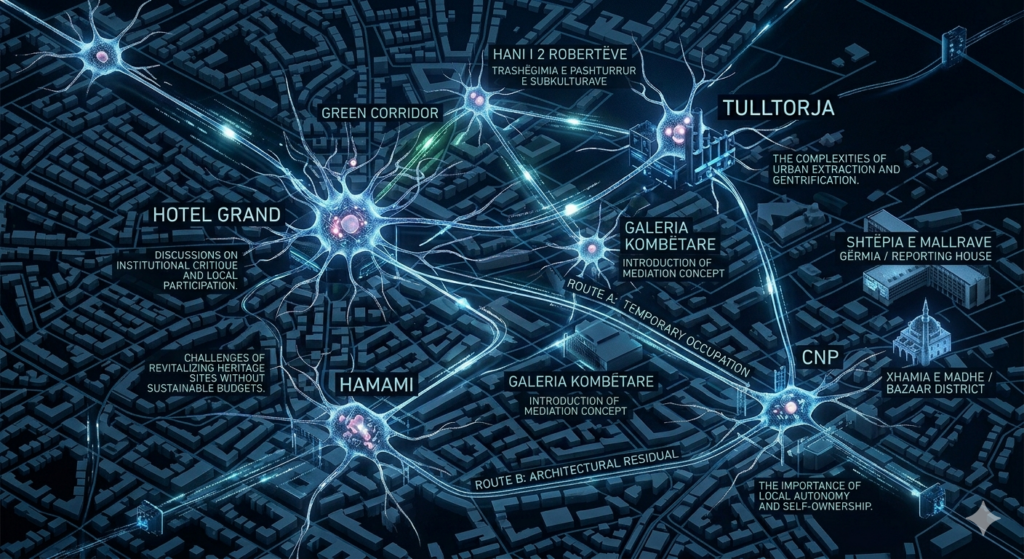
Another issue is the fragmentation of the cultural scene. In the absence of strong institutions, culture survives through small and temporary initiatives. These spaces are vital for experimentation, but they do not create continuity.
In this situation, contemporary art exists in a constant tension: between the need to be part of global circulation and the need to articulate a language rooted in local experience.
This tension is not necessarily a problem. On the contrary, it can be the point where a more distinctive artistic language emerges, if there is the courage not to avoid local reality in the name of universality.
Because the universal does not emerge from abstraction, but from deep engagement with the specific.
Perhaps the question is not whether art appears borrowed or not, but whether it has begun to trust its own material enough not to hide behind the language of the other.
In the end, art that appears “borrowed” may not be without identity. It may simply be art that has not yet had the time or confidence to articulate that identity in its own language.
Hana Kastrati
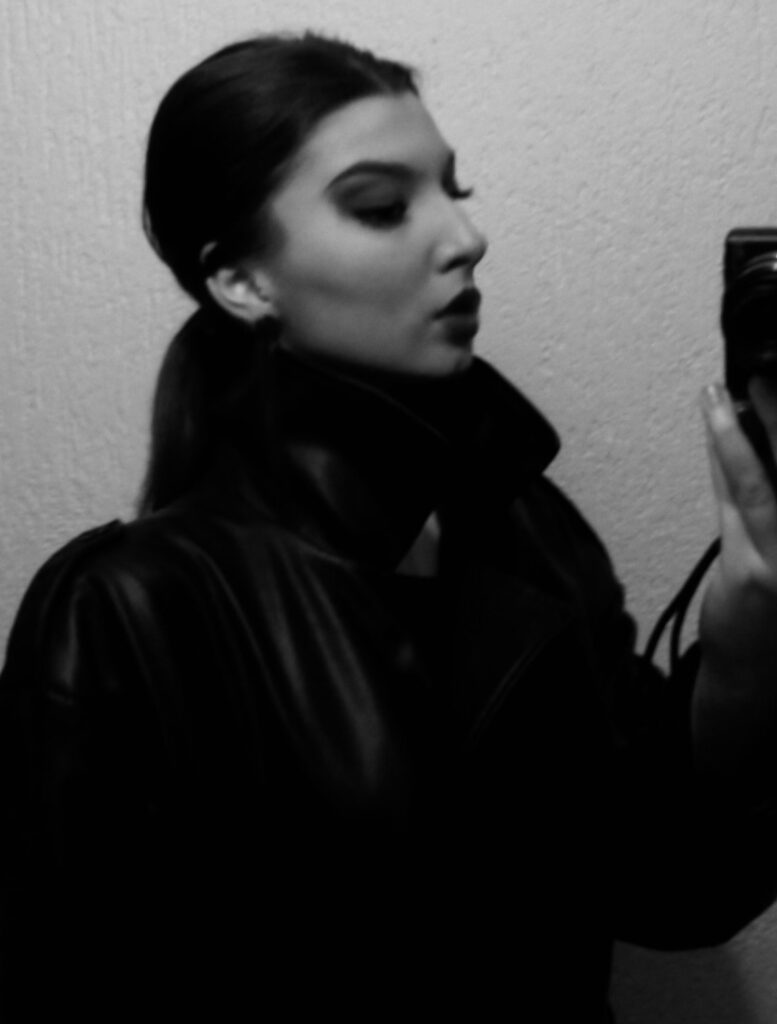
Hana Kastrati moves between art and writing, based in Prishtina, Kosovo, focusing on the intersection of architecture, history, philosophy, and contemporary art. Her writing explores memory, identity, and space as cultural structures, reading the city and everyday landscapes as carriers of social and historical transformations. Her work develops through self-publishing and an ongoing process of philosophical self-awareness of the surrounding reality, as a way of understanding, articulating, analyzing, and engaging with historical consciousness.
This blog was published with the financial support of the Swiss Agency for Development and Cooperation (SDC) within the framework of the project “Strengthening Cultural Expression.” The content of the article is the sole responsibility of Hani i 2 Robertëve and does not necessarily reflect the views of the Swiss Agency for Development and Cooperation.