CREATIVE WRITING
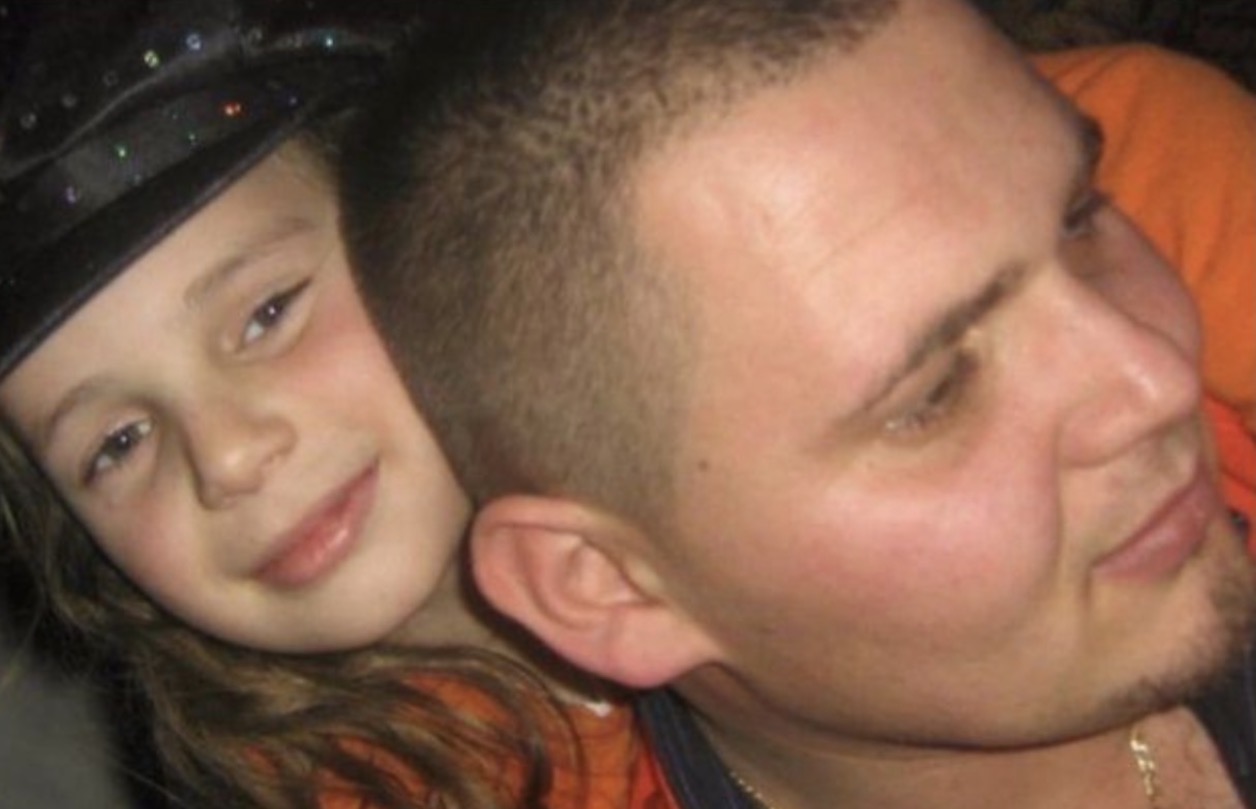
The photograph holds us in the middle of that winter evening, the kind that gathers quietly before New Year’s Eve fully arrives. I am small, five, maybe six, lifted high on his back, my arms loose around his neck, more for balance than holding on. My feet swing slightly as he shifts his weight, the tips of my shoes brushing against his coat. The wool of his sweater scratches softly against my hands. From up there, the room seems different, larger somehow. The tops of chairs appear level with my eyes. The adults standing nearby seem farther away than usual. For a moment, the ordinary height of childhood disappears, replaced by the borrowed height of someone else's shoulders.
My brother is so much older, seventeen years stretched between us. Old enough to leave and return, old enough to carry stories from places I do not yet know. There is something of the outside world clinging to him, the cold caught in the folds of his coat, the smell of the road, the distance he has traveled to arrive back home. To me, he feels impossibly tall, impossibly grown. I do not understand years yet, but I understand his arrivals and departures. I understand the excitement that rushes through the house when he comes through the door.
The hat he brought me sits a bit big on my head. The edge slips low over one eyebrow, and every few moments I push it back without thinking. It still holds the crispness of something new. The fabric feels unfamiliar against my forehead, carrying the faint scent of a store, of cardboard and paper and places beyond our village. It is the kind of gift that immediately becomes part of the evening, as though I have owned it much longer than a few hours.
I lean forward, laughing into his shoulder. My laughter comes easily, without restraint, the way children's laughter often does. His shoulder rises beneath my cheek as he laughs too, though more quietly. For a moment, I press my face against his coat and see nothing but dark fabric and the loose strands of yarn near the collar. Everything feels steady there.
He turns his face slightly, not quite toward the camera, while my sister captures the picture. Perhaps she says something just before pressing the button. Perhaps someone else calls out from another room, drawing his attention away for a second. The camera catches him between movements, between looking and not looking, between posing and simply being there. The photograph preserves that unfinished gesture, that fraction of a second when nobody is entirely still.
Around us, the house moves. A chair scrapes gently across the floor. Someone passes through the hallway carrying plates stacked carefully in both hands. Coats hang near the entrance, sleeves touching, damp from the cold outside. The curtains shift slightly whenever the door opens. A radio murmurs from another room, its sound fading beneath conversations that overlap and drift through the house.
Somewhere beyond the frame, voices rise and fall, plates touch lightly, something is being prepared in a hurry. The smell of baking bread mingles with roasted meat and spices. A pot lid rattles briefly before being settled back into place. Someone asks a question from the kitchen and receives an answer from another room. A cousin laughs loudly. An older relative repeats a story that everyone already knows but listens to again anyway. The house seems to breathe with all those small sounds.
A door opens, then closes. Cold air slips inside for a second, brushing against warm cheeks before disappearing. New arrivals stamp snow or mud from their shoes at the entrance. Greetings echo through the hallway. Jackets are removed. Hands are shaken. Someone calls for more chairs.
The air feels full without being loud. It is the fullness of people gathered together after being apart, of conversations crossing over one another without urgency. Every room holds traces of movement. Glasses catch the light. Shadows stretch across the walls. The clock continues its quiet work somewhere in the background, unnoticed by most of us.
And then my laughter cuts through it. Bright and sudden, it seems to rise above everything else for a moment. Heads turn briefly. Someone smiles. The sound belongs completely to the child I was, untouched by self-consciousness, untouched by the awareness that moments pass and become memories.
Later, the night will move forward, family gathering closer, waiting for something to begin. The table will fill. People will glance occasionally at the clock. The excitement of the approaching midnight hour will settle over the house little by little. Conversations will pause and begin again. Empty plates will replace full ones. The evening will stretch into something softer and slower.
And then it will end, and he will go again. The bags will be packed. Goodbyes will be spoken. The familiar ache of departure will return, though I will not yet have the words for it. The house will grow quieter after he leaves, carrying the strange emptiness that follows someone whose presence fills more space than their body occupies.
But here, he has just come back, and I am still on his back, laughing. The future has not yet entered the room. Departure has not yet cast its shadow across the evening. There is only this moment held still: the oversized hat, my arms around his neck, my sister behind the camera, the house alive around us. A winter evening suspended between arrival and farewell, preserved in a single photograph long after the voices have faded and the night itself has passed.
Edmonda Bajraktari
Student of English Language and Literature. Passionate about reading, very often about creative writing as well.
Works as an English teacher and she likes the feeling of teaching someone new things, especially new words..
This blog was published with the financial support of the Swiss Agency for Development and Cooperation (SDC) within the framework of the project “Strengthening Cultural Expression.” The content of the article is the sole responsibility of Hani i 2 Robertëve and does not necessarily reflect the views of the Swiss Agency for Development and Cooperation.